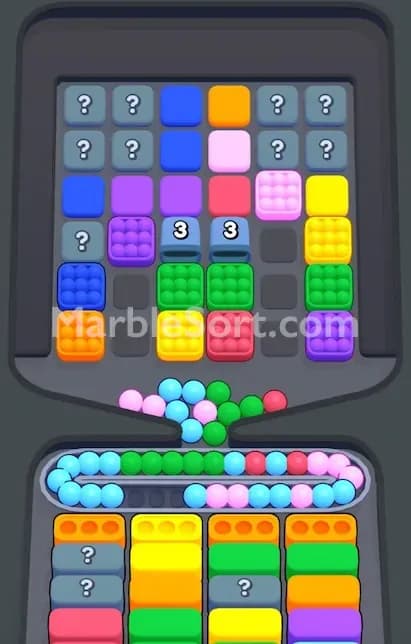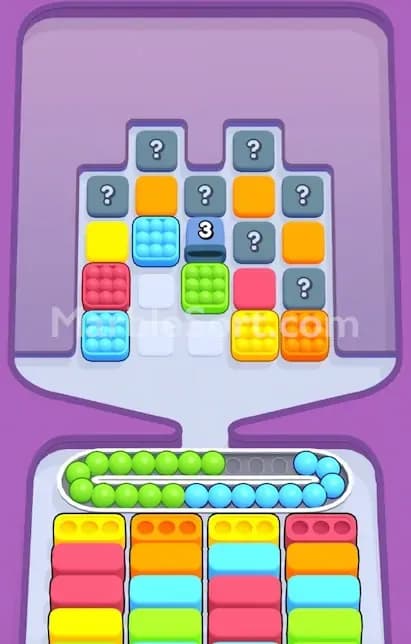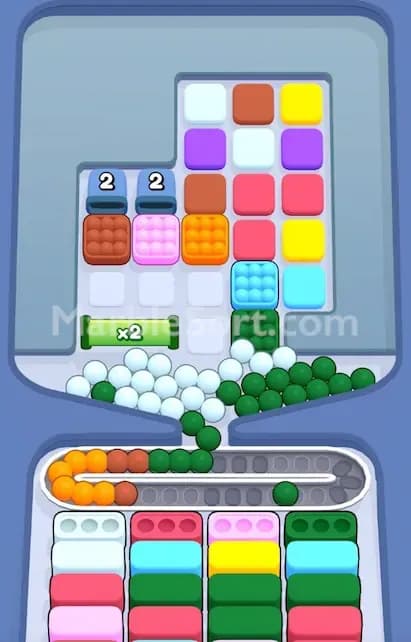
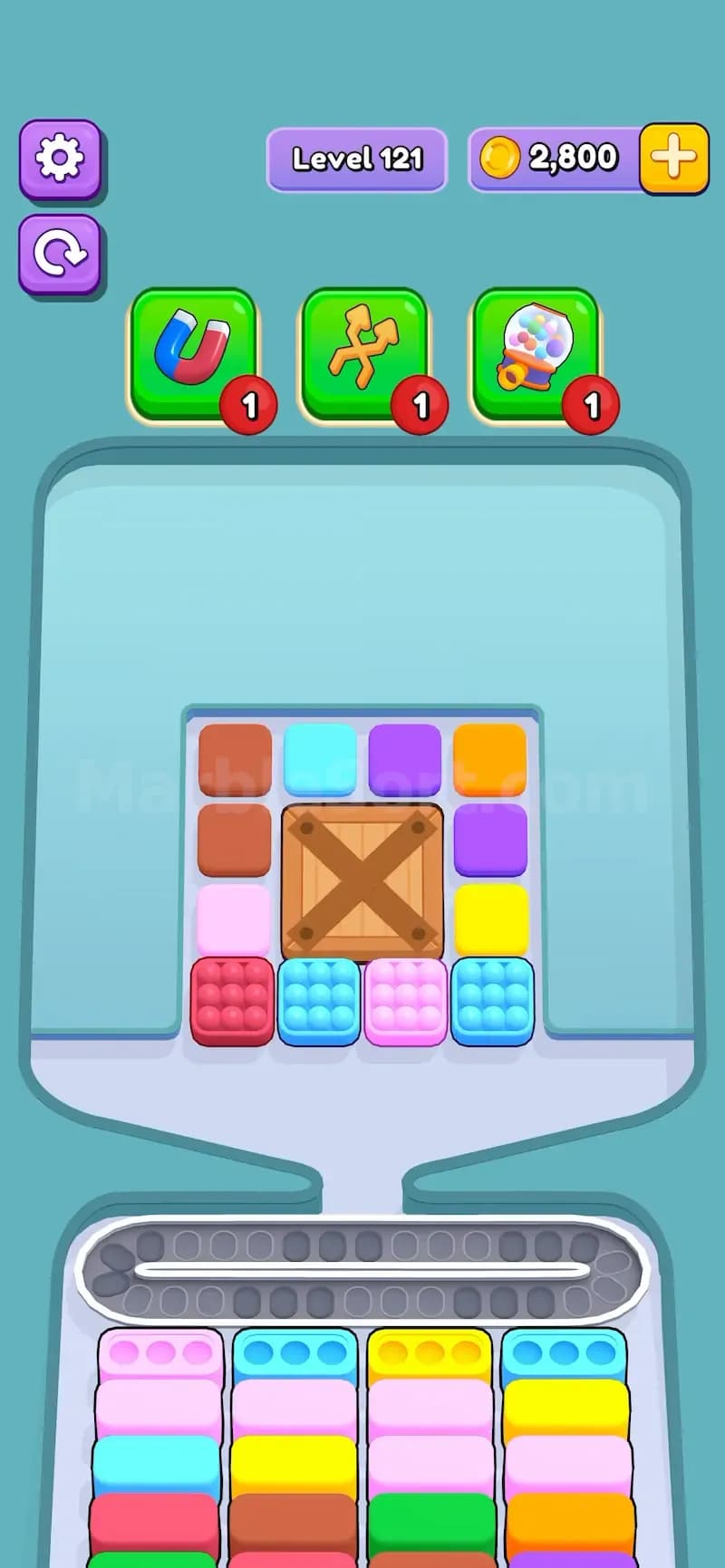
That wooden Crate with the big X on it is not just decoration. It is blocking space, hiding four boxes, and forcing you to make a choice before you know what is inside.
That is the whole trick.
In Marble Sort, Crates are wooden containers that cover 4 marble boxes. You cannot use those boxes at first. You cannot see their colors either. The only way to reach them is to break the Crate by dropping nearby boxes. Once the Crate opens, the hidden boxes inside appear on the board.
Sometimes that is great. Sometimes it is a trap.
A Crate might contain the color you need to clear a bottom slot. It might also contain a Hidden Box, which means you break one blocker and immediately get another question mark. That is why Crates are dangerous in harder levels. They make you spend moves and conveyor space before you know whether the reward is useful.
Crates are wooden blocker objects. They sit on the upper board and hide 4 boxes of marbles behind them.
A Crate can hide:
You do not tap the Crate itself to open it. You have to clear boxes around it.
That matters because every box you drop sends marbles onto the Conveyor. If those marbles do not match your open bottom boxes, they stay there and take up space. Too many bad drops, and the belt jams.
Simple rule. Brutal result.
To open a Crate, you must drop 3 nearby boxes around it.
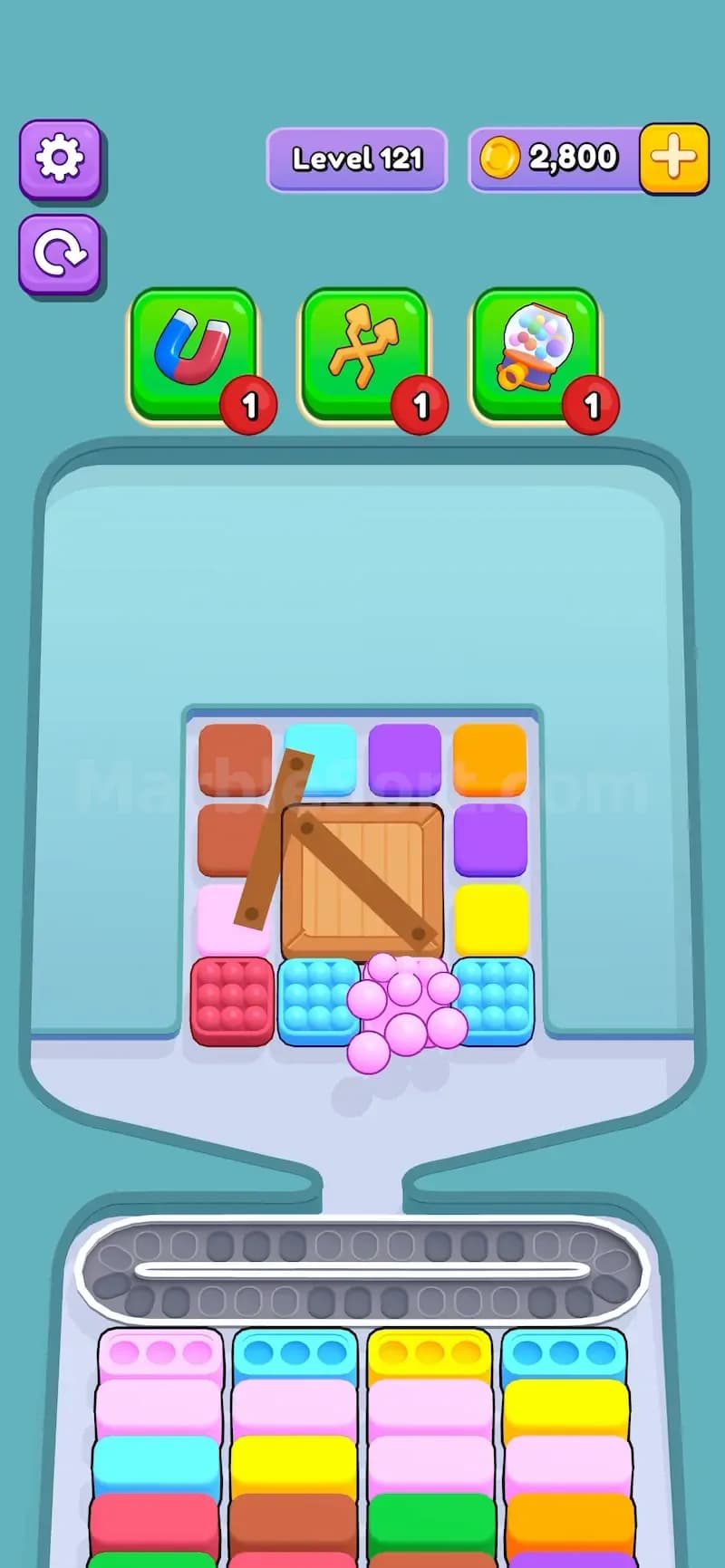
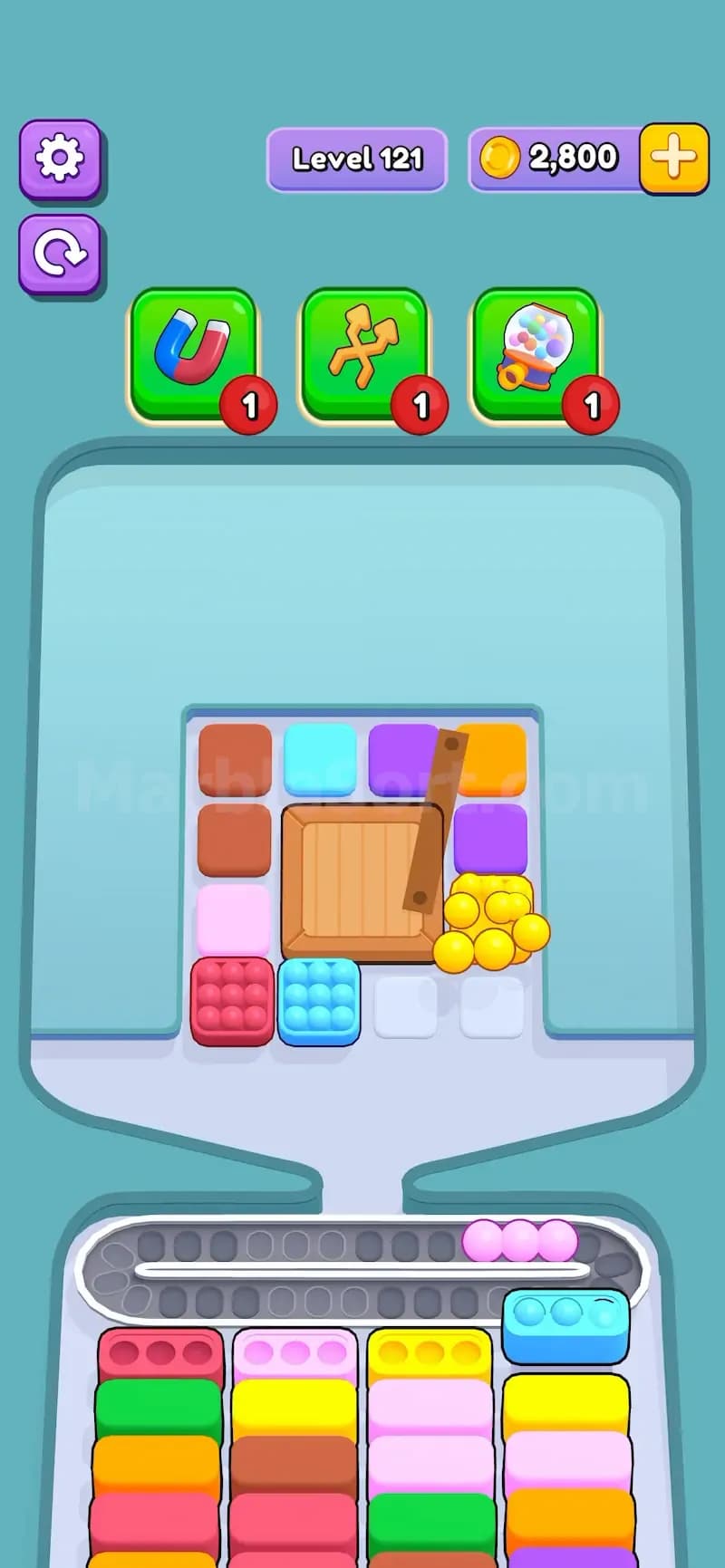
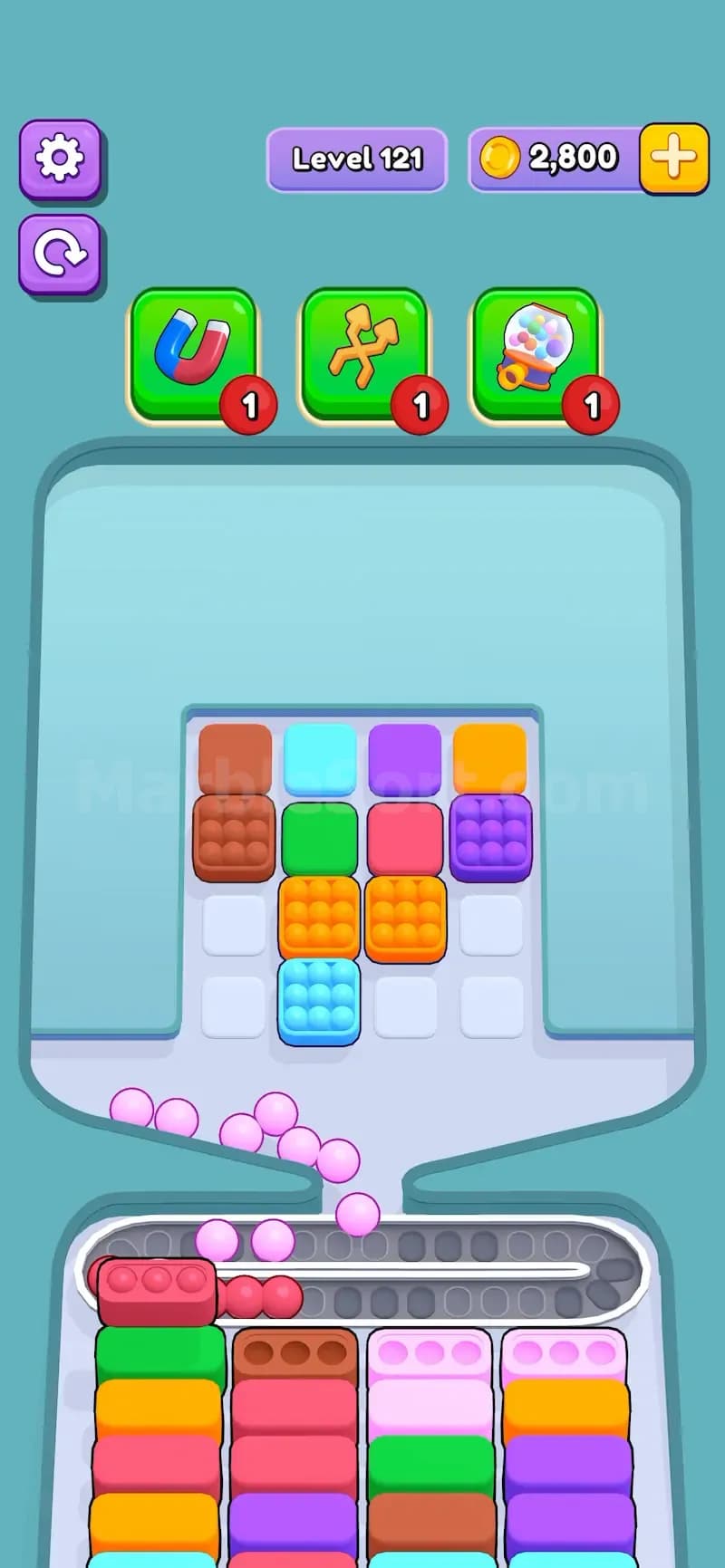
The nearby boxes can be from these positions:
Once you drop 3 valid nearby boxes, the Crate breaks and reveals the 4 hidden boxes inside.
The game does not ask whether you are ready. The moment the third nearby box drops, the Crate opens. So do not treat the third hit like a normal move. Treat it like a trigger.
Before that third drop, check the bottom slots. Check your conveyor. Check whether you can handle whatever appears next.
Crates block information and board access at the same time.
That is what makes them different from a normal color box. With a regular box, you can see the color and decide whether it helps. With a Crate, you are spending moves to reveal a mystery.
The Crate blocks:
This is why Crates feel unfair when they sit in the center of the board. They can hide the only color you need, but opening them too early can flood your options with colors you cannot use yet.
Hard levels love this trick. They place a Crate near useful boxes, then make you decide whether to open it now or clear the outer board first.
The worst mistake is breaking a Crate just because it is available.
Bad move.
If your Conveyor is already crowded, opening the Crate can create more pressure. The revealed boxes may not match anything at the bottom. You may see four new boxes, but none of them help your current setup. Now you still have a messy belt, and the board has changed.
That is how a level slips away.
Open a Crate too early and you may face:
The Crate is not always the first thing you should break. In many levels, it is better to clear normal visible colors first, fill one or two bottom boxes, then break the Crate when you have room to react.
Now the other side.
Ignoring a Crate can also lose the level.
Sometimes the color you need most is inside the wooden box. You can stare at the board forever and not find another match, because the game is waiting for you to break the Crate.
This happens a lot in harder stages. You will see a bottom box asking for a color that barely appears on the visible board. The missing box is often trapped inside the Crate.
When that happens, stop wasting moves around the edges. Start working toward the Crate, but do it cleanly. Drop nearby boxes that also match your current bottom slots. That way, every hit helps twice: it fills space below and damages the Crate.
Use this order when a Crate shows up:
That one-second pause matters. A lot of players break the Crate and keep tapping like nothing changed. Then they drop the wrong revealed box and jam the Conveyor.
Do not do that.
A Crate reveal changes the board. Read it again.
A Crate can contain Hidden Boxes. That means the box inside may still show a question mark after the Crate opens.
So yes, you can break a mystery box and find more mystery inside it.
Annoying. But manageable.
When a Crate reveals a Hidden Box, you still need to expose that hidden color through normal gameplay. Do not instantly drop random boxes around it unless you have room on the belt. First, ask one thing: does this hidden area connect to the colors I need?
If yes, start clearing toward it.
If no, leave it alone until the board gives you a reason.
Most losses around Crates come from impatience. The feature looks breakable, so players break it. That is not strategy. That is button mashing with extra steps.
Avoid these mistakes:
The biggest one is the third hit. That is the move that opens the Crate. Make it count.
Open a Crate when at least one of these is true:
Do not open a Crate when:
That last one gets people. A lot.
If a Crate needs one more nearby drop to open, wait until a matching bottom box is almost ready. Then use the third hit on a color that fills or nearly fills that bottom box. The Crate breaks, the bottom clears, and you get fresh space right as the hidden boxes appear.
That timing feels small, but it saves messy levels.
Also, do not always attack the Crate from the closest side. If one side clears a path toward a buried useful color, break from that side instead. You are not just opening wood. You are shaping the next few moves.
Break 3 nearby boxes to open the Crate and reveal 4 hidden boxes.
That is the short version.
The smart version is this: only break a Crate when the move also helps your bottom slots or gives you access to a color you actually need.
Crates punish blind tapping. Break them with space, break them with purpose, and do not trust the reveal until you see what is inside.