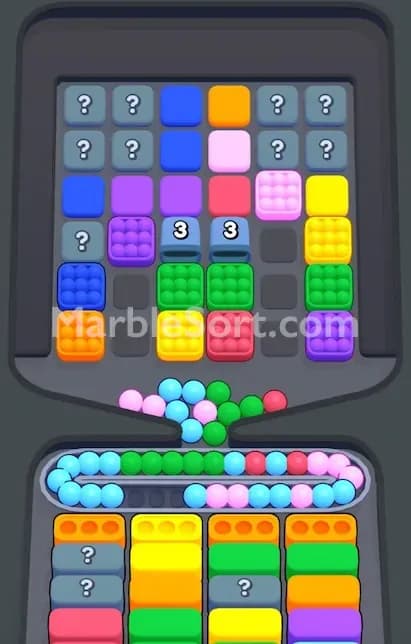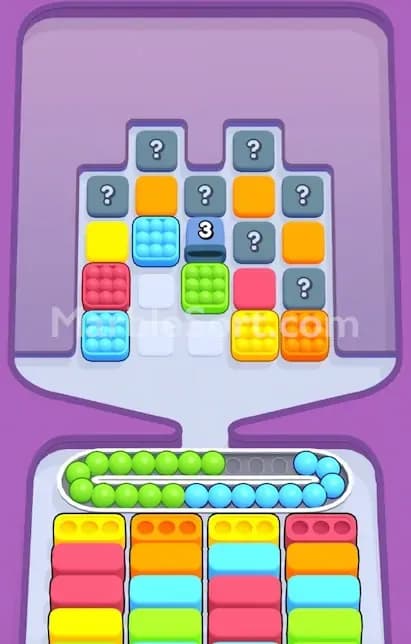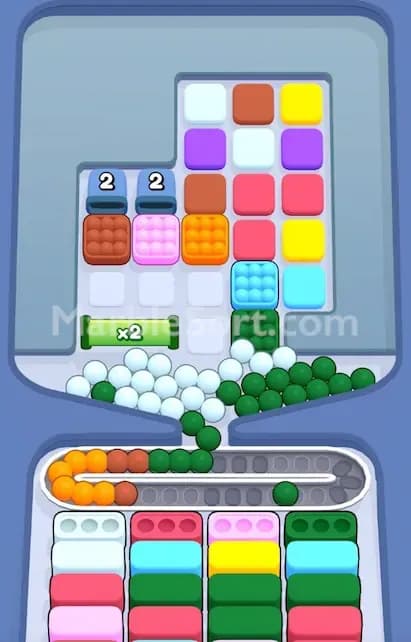

You can see the color. You still can’t tap it.
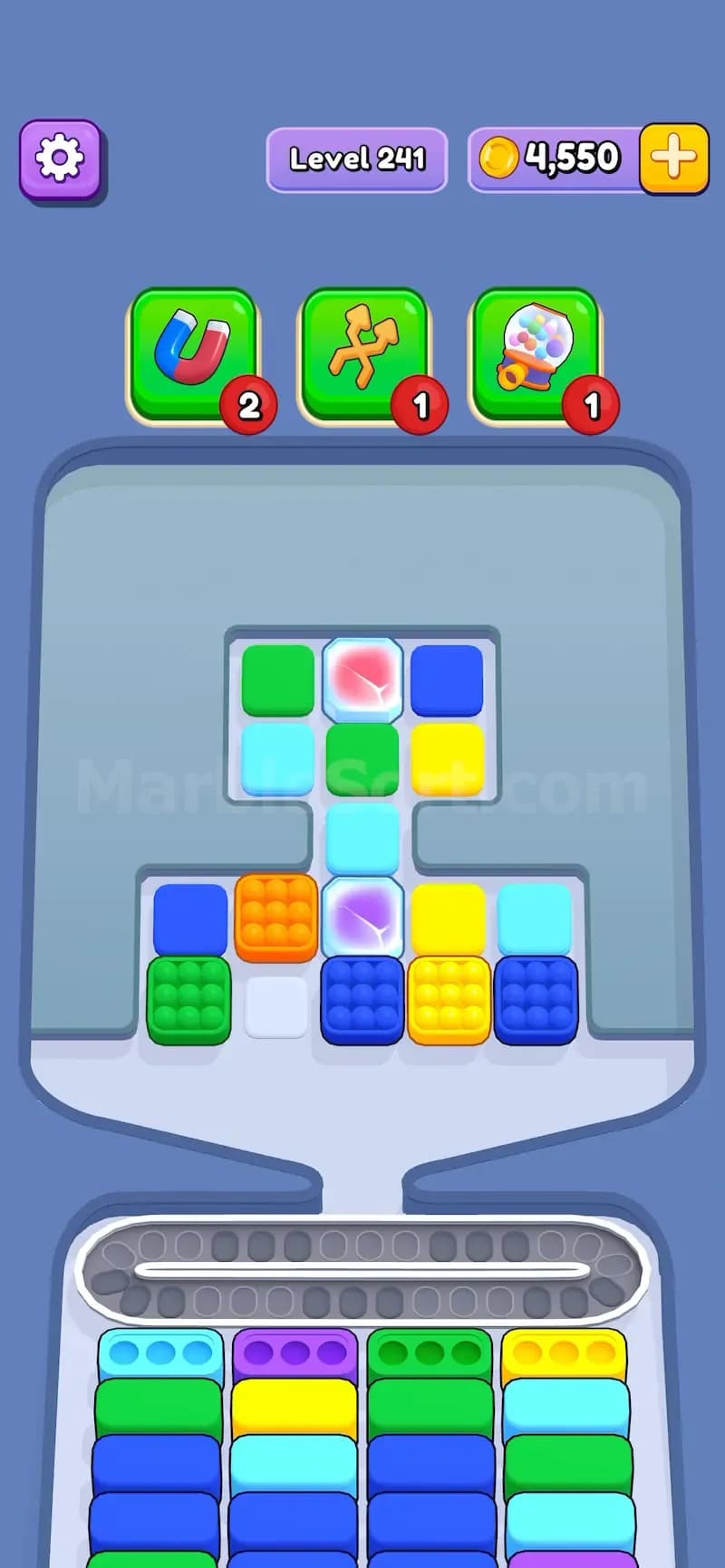
That is the whole trick behind Ice Box in Marble Sort. It looks like a normal marble box, but it is trapped inside ice. The game is basically saying, “Yes, this is the color you need. No, you cannot have it yet.”
Annoying? Very.
Useful once you understand it? Also yes.
Ice Box is a blocker feature. It delays access to a known marble color and forces you to clear nearby boxes before you can use it. Unlike Hidden Box, which hides the color, Ice Box shows the color from the start. The puzzle is not about guessing. The puzzle is about opening the frozen box without flooding the conveyor with marbles you cannot use.
That tiny difference matters a lot on hard levels.
Ice Box is a marble box covered by ice. The color inside is already visible, so you know exactly what marbles it contains. But the ice blocks the box from being dropped.
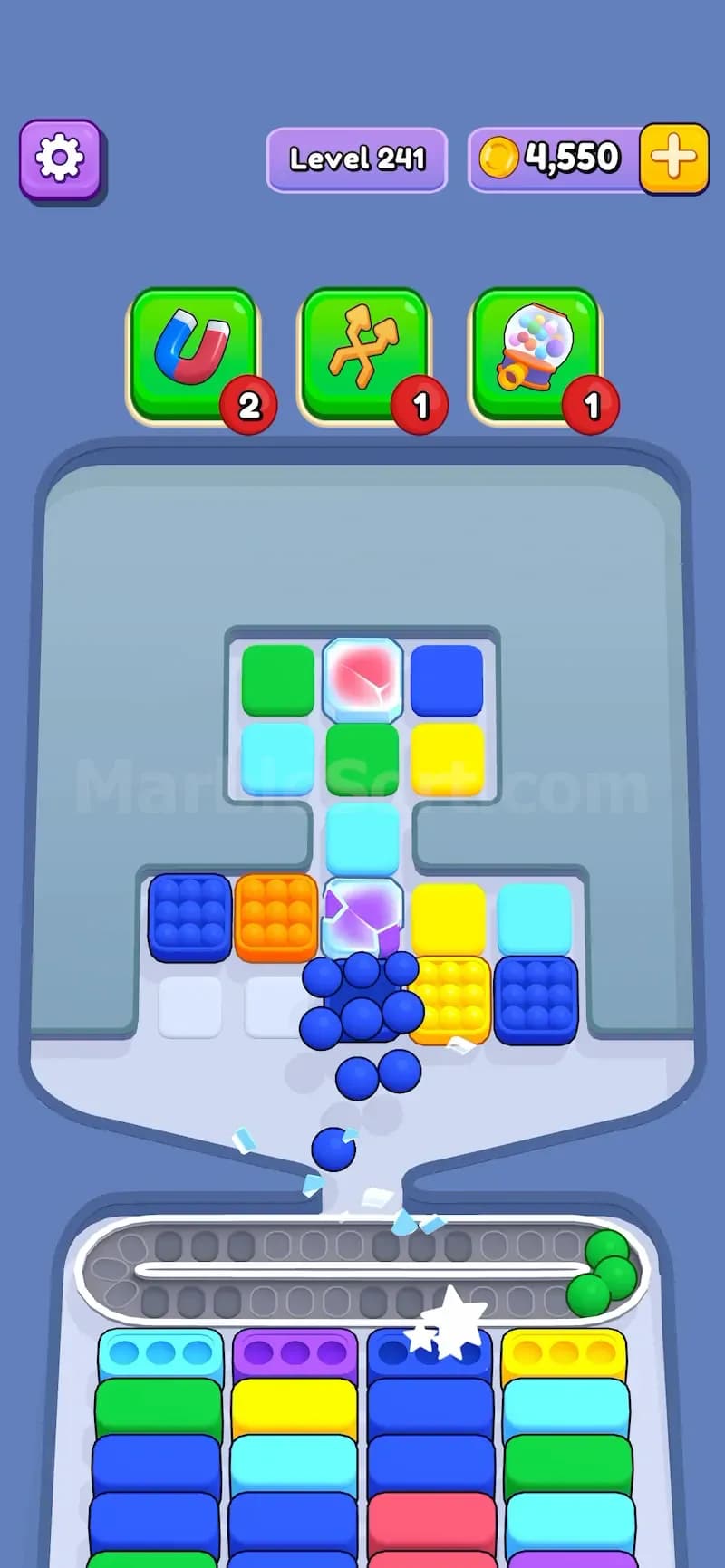
To open an Ice Box, you need to drop two nearby boxes.
Nearby means only the four direct sides:
Diagonal boxes do not count. If a box touches the corner of the ice, ignore it. It will not help.
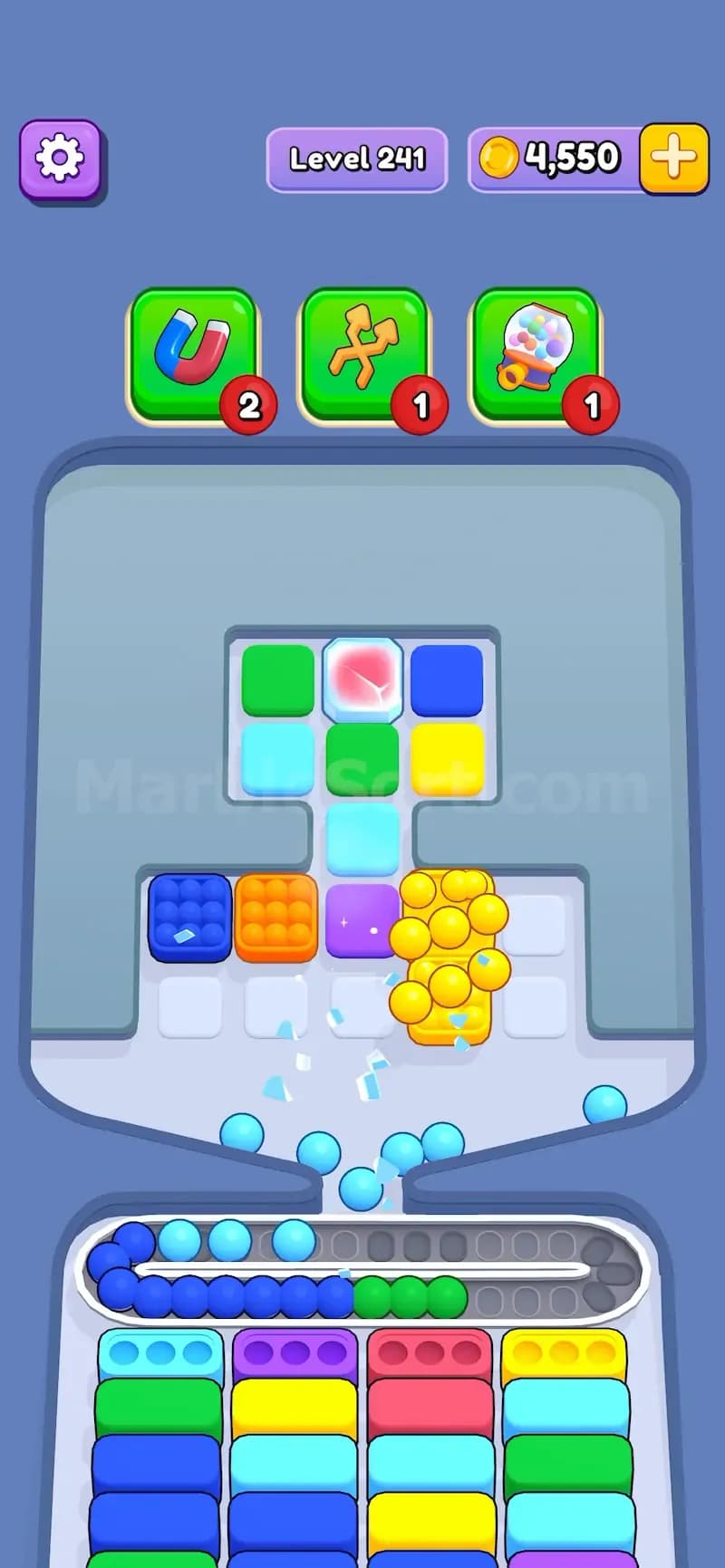
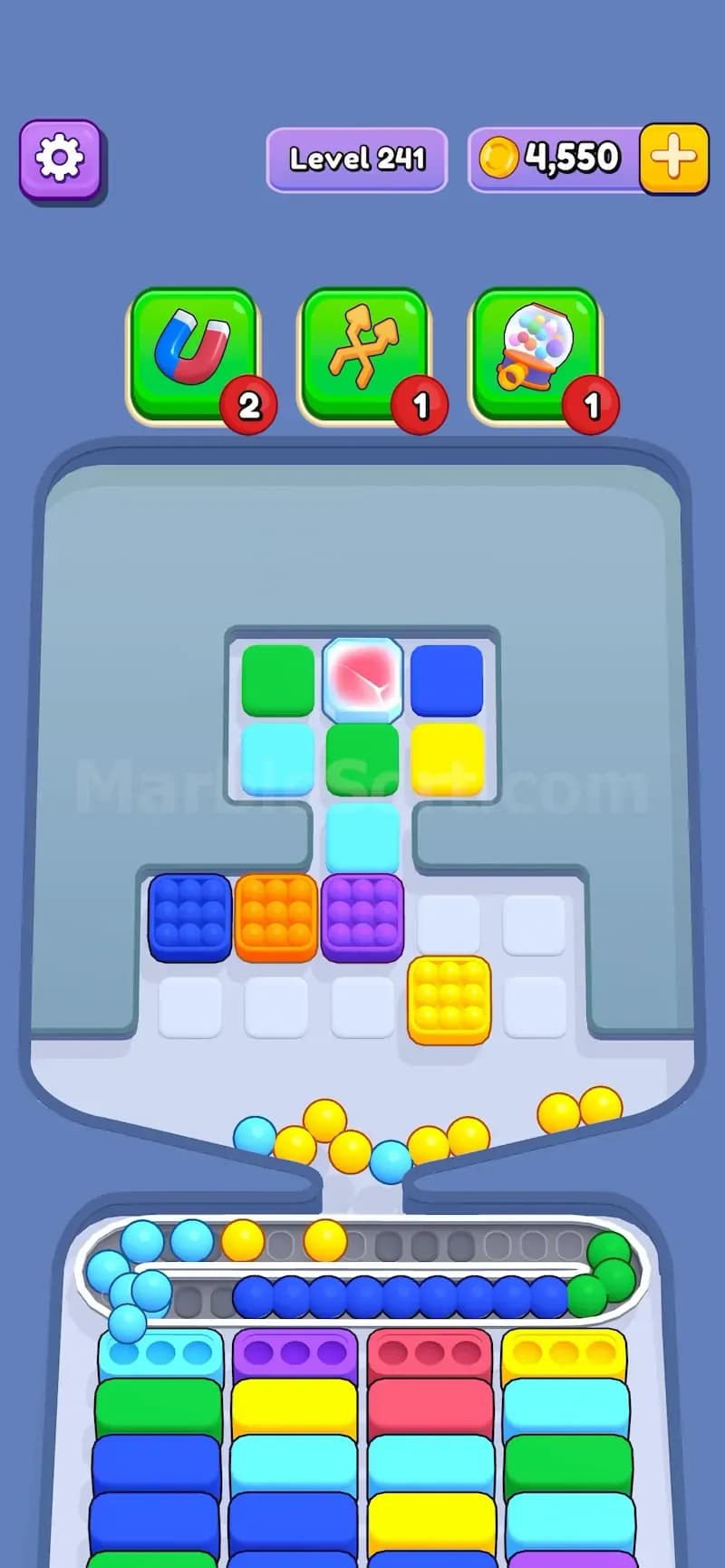
After you drop two valid nearby boxes, the ice breaks. The frozen box becomes a normal box, and you can tap it when you are ready.
Simple rule. Mean setup.
That final step is where most players mess up.
Breaking the ice does not mean you should drop the box right away. If the conveyor is already crowded, tapping the newly opened Ice Box can make things worse. You might release the color you wanted, but if the matching bottom slots are not ready, those marbles just ride around and eat space.
Then the belt jams.
Dead level.
Ice Box blocks access to useful marbles. That is its job.
The game often places a frozen box in a spot where it looks tempting. Maybe it contains blue, and you have two blue bottom boxes waiting. Great. But the two boxes beside the ice might be yellow and green, and there may be no good place for those colors right now.
So now you have a trade:
Do you drop two bad boxes to open one good box?
Sometimes yes. Sometimes no.
That is why Ice Box is not just a tap-and-clear mechanic. It forces timing. You need to decide whether the frozen color is worth the cost of opening it. On easy levels, the answer is usually obvious. On hard levels, the wrong two nearby drops can fill your conveyor before the useful box even opens.
That hurts.
Do not break every Ice Box just because it is there. Pick the frozen box that actually helps your current bottom queue.
Use this order:
Check the bottom boxes first. Look at what colors can clear right now. If the bottom needs red, then a red Ice Box is worth planning around.
Check the nearby boxes second. If the boxes around the ice are colors you can also use, open it. That is the cleanest play.
Avoid bad-color payments. If opening the ice forces you to drop colors with no matching space, wait.
Break ice when the conveyor is calm. Do not start an ice break while marbles are already piling up. Clear one or two bottom boxes first.
Use the opened Ice Box as a reserve. After the ice breaks, you do not have to tap it instantly. Let it sit until its color is safe to drop.
That last one is huge. A broken Ice Box is not a threat until you tap it. Treat it like a stored move.
The most common mistake is opening the wrong frozen box too early.
A player sees a useful color, gets excited, and drops two nearby boxes without checking the conveyor. Now the ice is broken, but the belt is full of random marbles. The good color is finally available, but there is no room to release it.
Bad trade.
Another mistake is ignoring the second nearby drop. Players often drop one box beside the ice, then forget the frozen box is half-open. Later, they accidentally drop another nearby box and break the ice at a bad time. This can mess up the flow, especially if the board has Gift Box, Crates, or Elevator mixed in.
Track your half-broken ice.
Seriously. It matters.
Ice Box gets nastier when the game stacks it with other blockers.
With Gift Box, the nearby drop that breaks ice may also open the gift and change which boxes are reachable. So the box you planned to tap next might suddenly become blocked. Check the board before triggering both at once.
With Elevator, frozen boxes can sit on a floor that controls access to later boxes. If you clear the wrong side too fast, the elevator may move before you finish using the current floor. Sometimes you want to leave one box untouched so the floor does not shift too early.
With Crates, the problem is space. Crates already demand nearby drops. Ice also demands nearby drops. When both features appear together, every tap needs to do double work. Pick drops that damage the crate and break ice at the same time. Waste fewer moves.
With Hidden Box, the choice gets less clear. You know the color inside the Ice Box, but you do not know what is hiding nearby. That means the safer play is usually to open known colors first, then test hidden boxes once the conveyor is clean.
Open an Ice Box when at least one of these is true:
Do not open it when:
That is how hard levels bait you.
If an Ice Box needs two nearby drops, do not always break it in one rush.
Drop one safe nearby box early, then stop. Now the frozen box is halfway opened. Later, when the bottom queue finally needs that color, drop the second nearby box and break the ice right when you need it.
This trick keeps the Ice Box as a timed backup instead of turning it into early chaos. It is especially good when the frozen color is rare and you know the game will ask for it later.
Half-break it. Wait. Finish it when the board is hungry for that color.