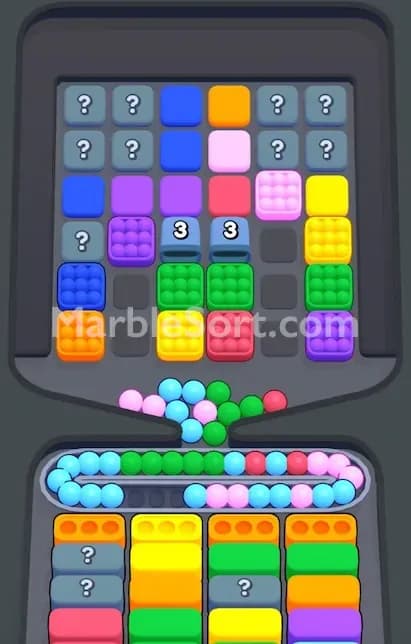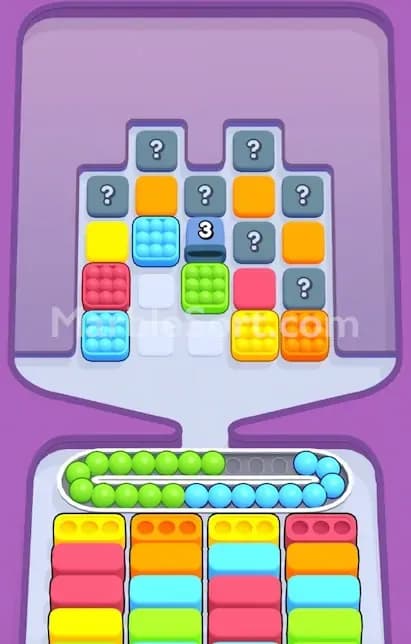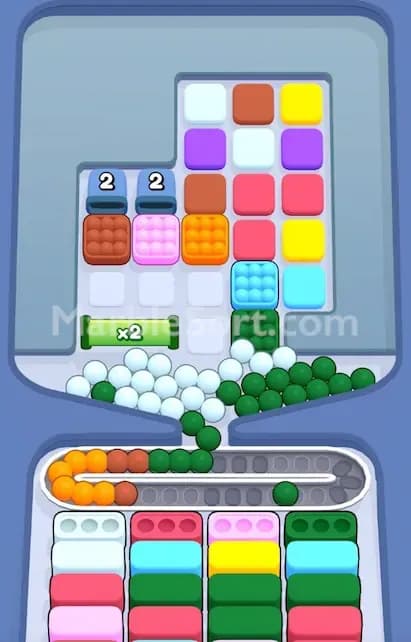

The Panel is that big numbered door sitting on the board, blocking a full set of boxes behind it while your conveyor is already getting crowded. It looks simple. It is not.
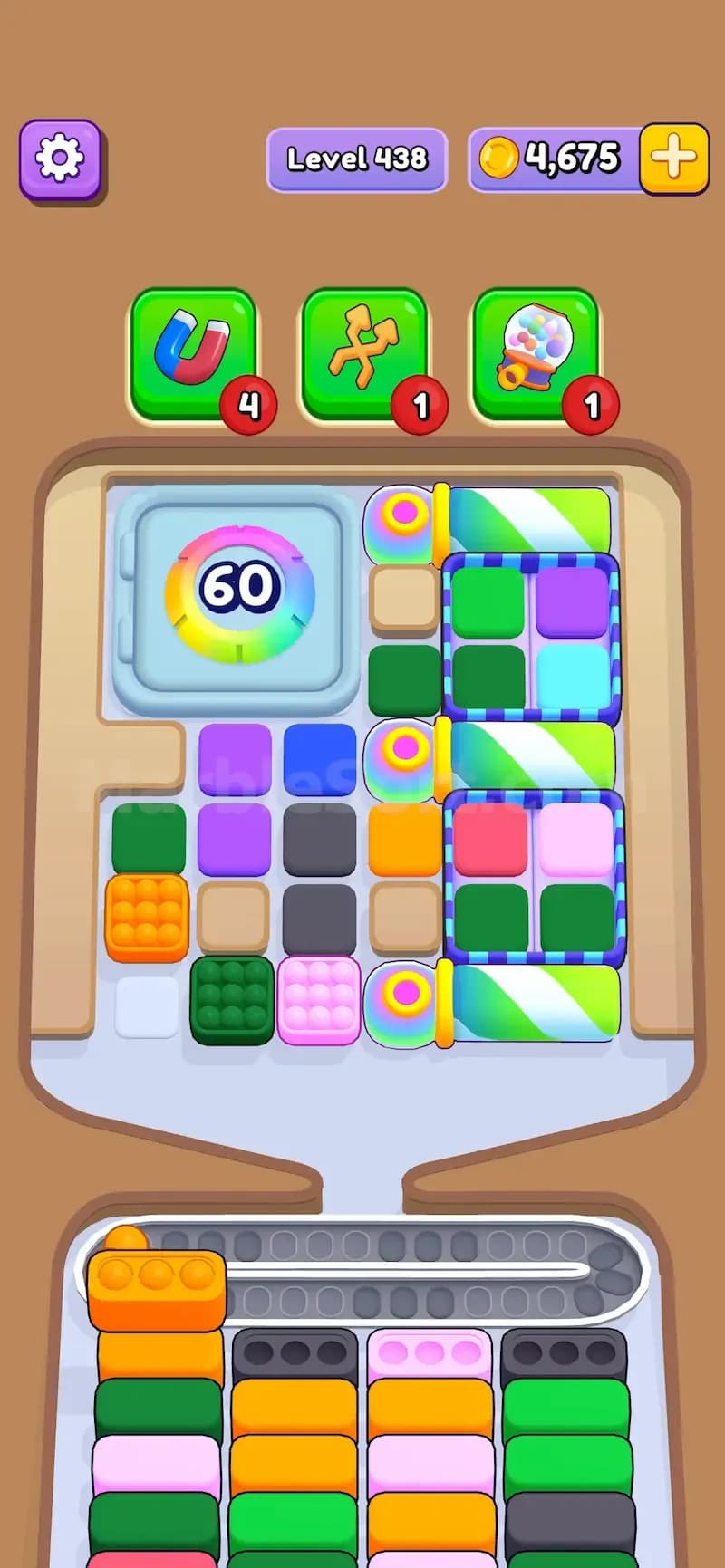
In Marble Sort, a Panel protects 9 unknown boxes behind a closed door. You cannot use those boxes right away, even if the colors behind them are exactly what you need. The number on the Panel tells you how many bottom boxes you still need to complete before the door opens.
If the Panel shows 60, you need to fill 60 bottom boxes first. Every time you complete one bottom box, the number drops by 1. When the number reaches 0, the Panel opens and the 9 boxes behind it appear.
That is the whole trick. The boxes exist, but they are delayed.
And that delay is what makes the level dangerous.
Panels are blocker features. They do not block just one marble or one path. They block information, space, and future options all at once.
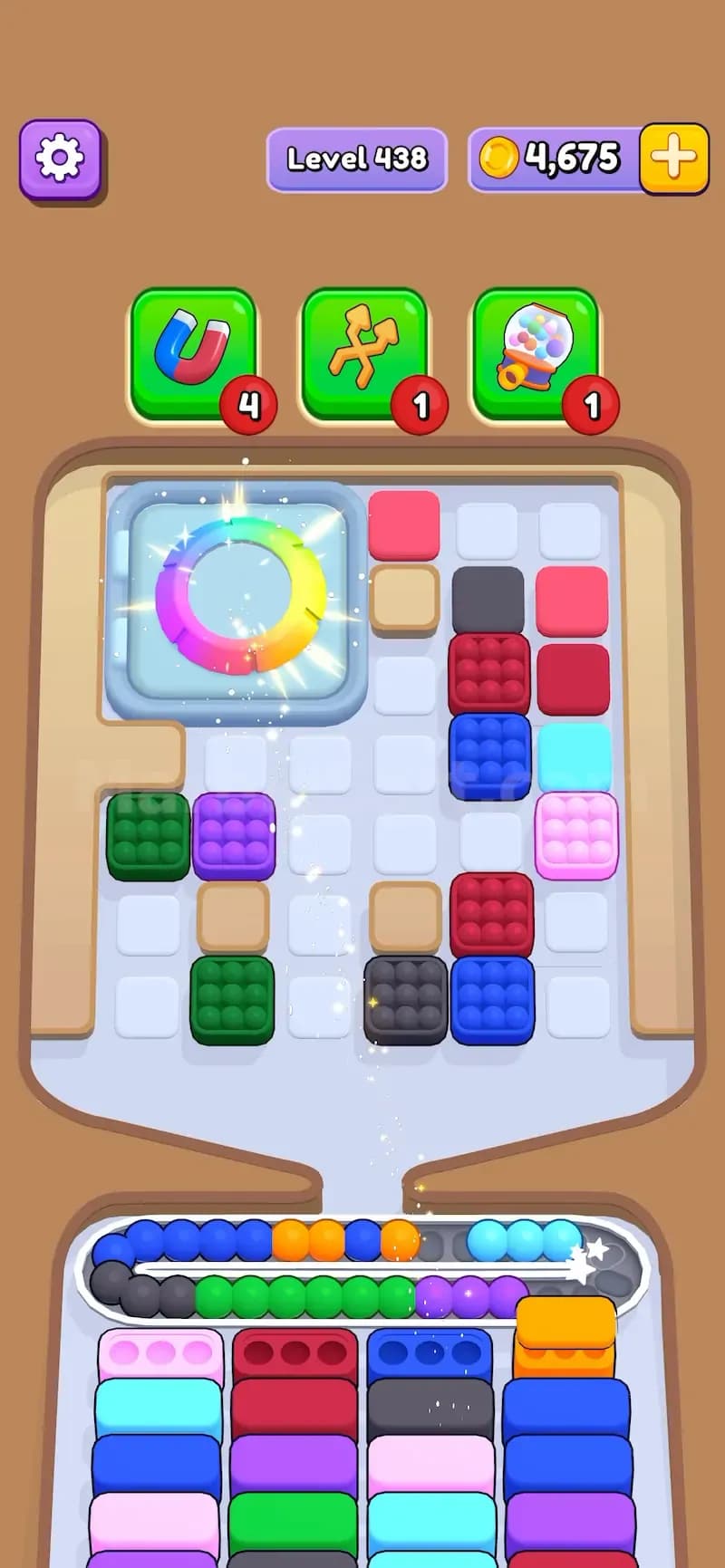
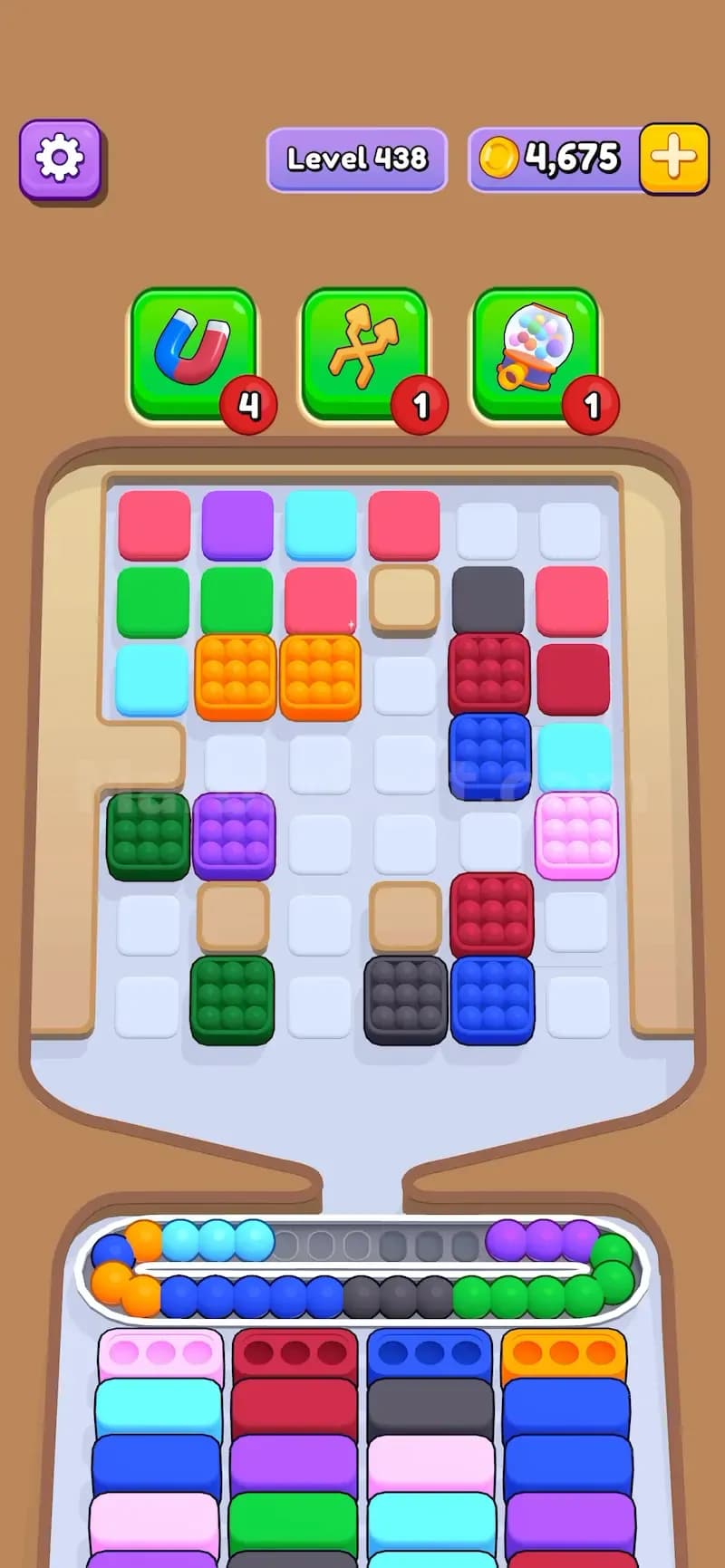
Behind a Panel, you may find:
This means you cannot plan the whole level from the start. You only know one thing: you must keep clearing visible bottom boxes until the door opens.
That makes Panels different from simple blockers. A normal blocker usually says, “Clear this thing, then continue.” A Panel says, “Survive for a while with fewer options, then maybe I’ll give you what you need.”
Brutal. Fair, but brutal.
The number on the Panel is a progress counter.
Each completed bottom box reduces the number by 1. It does not matter what color the completed box is. It does not matter where the marble came from. The only thing that matters is finishing a box at the bottom.
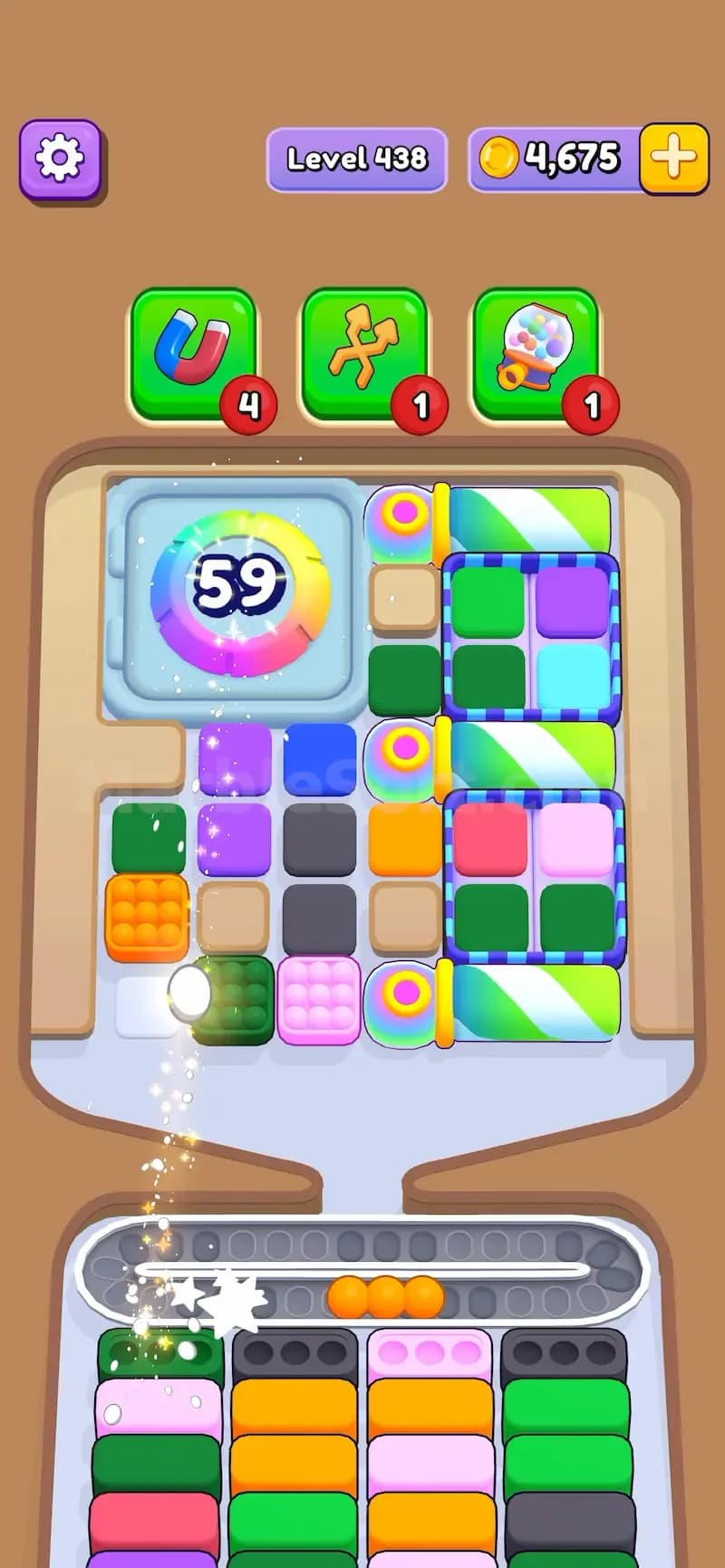
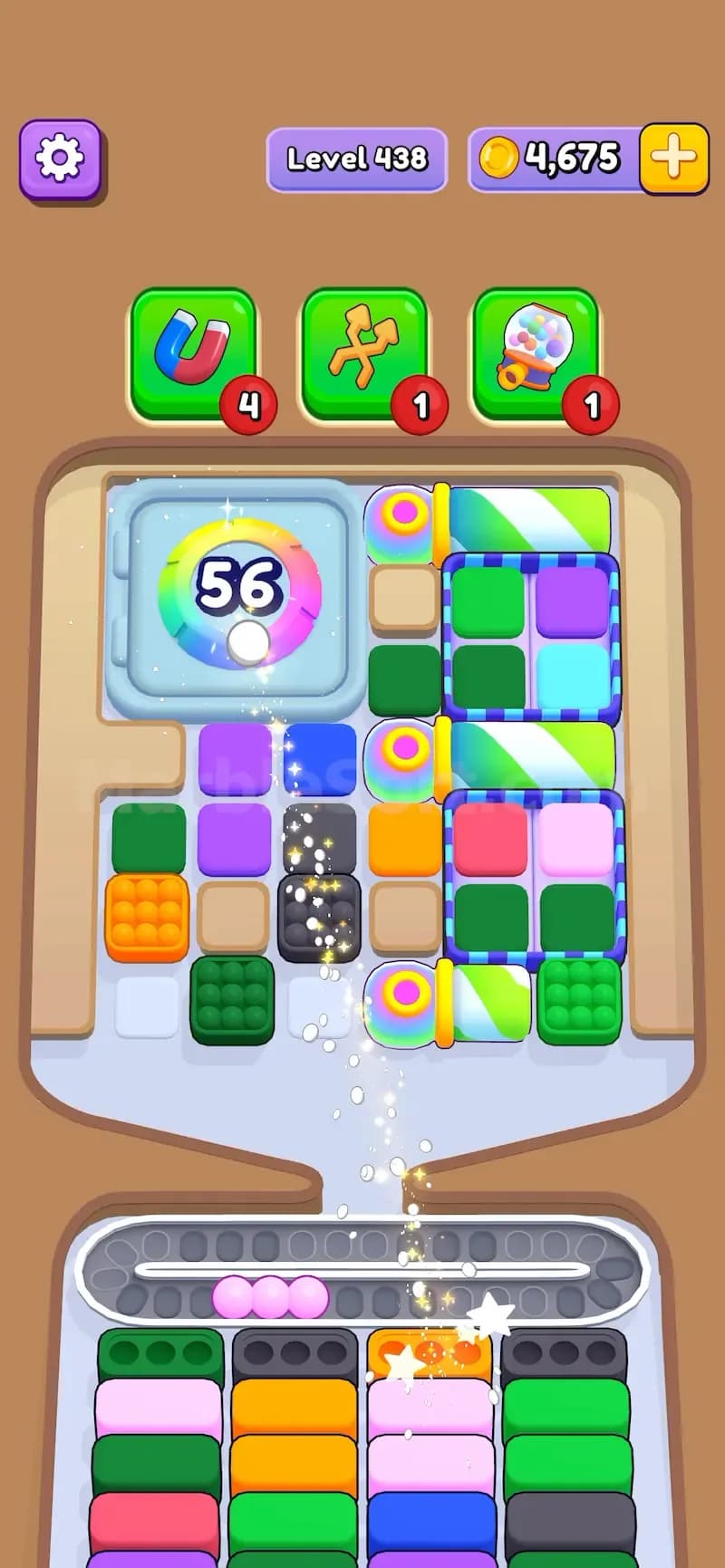
Here is the basic flow:
A high number means you are not getting those boxes soon. A low number means you should start preparing for the door to open.
That last part matters a lot. When the Panel is close to opening, the board state can change fast. You may suddenly get new colors, new hidden boxes, or new targets for marbles that were stuck on the conveyor.
Panels pressure your resource management. The main danger in Marble Sort is not dropping the wrong marble once. The real danger is filling the conveyor with marbles that have nowhere to go.
A Panel makes that happen more often because it hides 9 possible destinations. Maybe you have red, blue, and green marbles waiting, but the matching boxes are behind the Panel. Too bad. You still need to keep clearing the visible boxes first.
This creates three problems at the same time:
That is why Panels feel stressful in hard levels. You are not just solving the current board. You are buying time.
Do not treat a Panel like a random door. Treat it like a timer. Every completed box brings you closer to more board space.
Use this plan:
Check the Panel number first. If the number is high, ignore the boxes behind it for now. They are not part of your short-term plan.
Clear easy bottom boxes early. Any box that needs only 1 or 2 marbles should become your first target. Fast clears lower the Panel number and free space.
Avoid risky color dumps. Do not drop a pile of marbles just because they are available. If there is no matching bottom box, they will sit on the conveyor and cause trouble.
Prioritize colors with active slots. If you already have a yellow box or purple box open at the bottom, feed it. Completed boxes open the Panel faster.
Slow down near zero. When the Panel number is low, stop panic tapping. Watch the conveyor, check what colors are waiting, then open the door at a useful moment.
That is the clean way to beat Panel levels. Not fast tapping. Controlled clearing.
Sometimes the boxes behind a Panel are not normal colored boxes. They can be Hidden Boxes, which means the door opens, but you still do not know every color right away.
Yes, the game can stack blockers like that.
When this happens, do not throw random marbles onto the conveyor just because the Panel opened. First, expose what you can. If a hidden box needs nearby boxes to clear before showing its color, focus on the visible boxes around it.
The Panel gives access. It does not always give answers.
That is why hard Panel levels can feel like two stages. Stage one is clearing enough bottom boxes to open the door. Stage two is figuring out what the newly revealed boxes actually need.
When the Panel is close to opening, leave one easy bottom box almost finished if you can. For example, if a blue box needs one more blue marble, hold that final blue drop until the conveyor is about to get messy. Then finish the box, open the Panel, and let the new 9 boxes appear right when you need extra destinations.
It feels a little dirty, but it works.
This trick is especially useful when the conveyor is carrying several colors with no current match. Opening the Panel at the right second can turn a near-loss into a clean recovery.