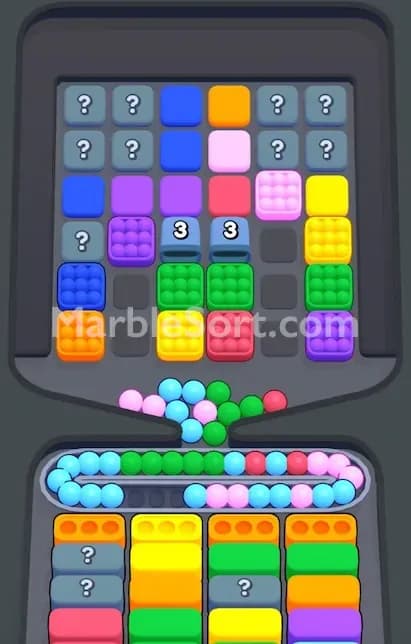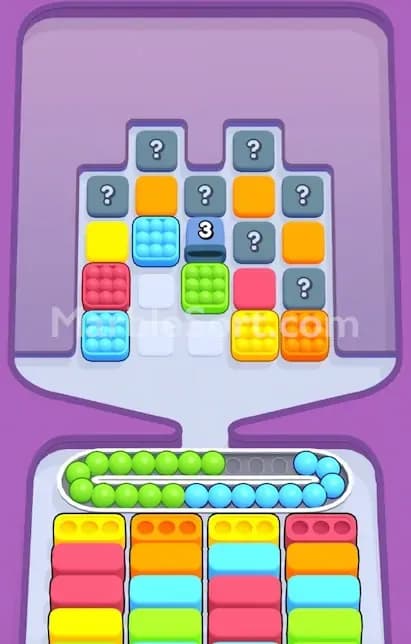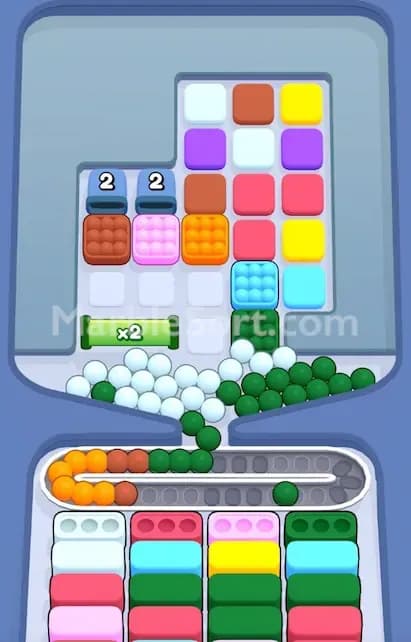
You see the color you need, you tap near it, and nothing moves. That usually means one thing: Pins are blocking the board.
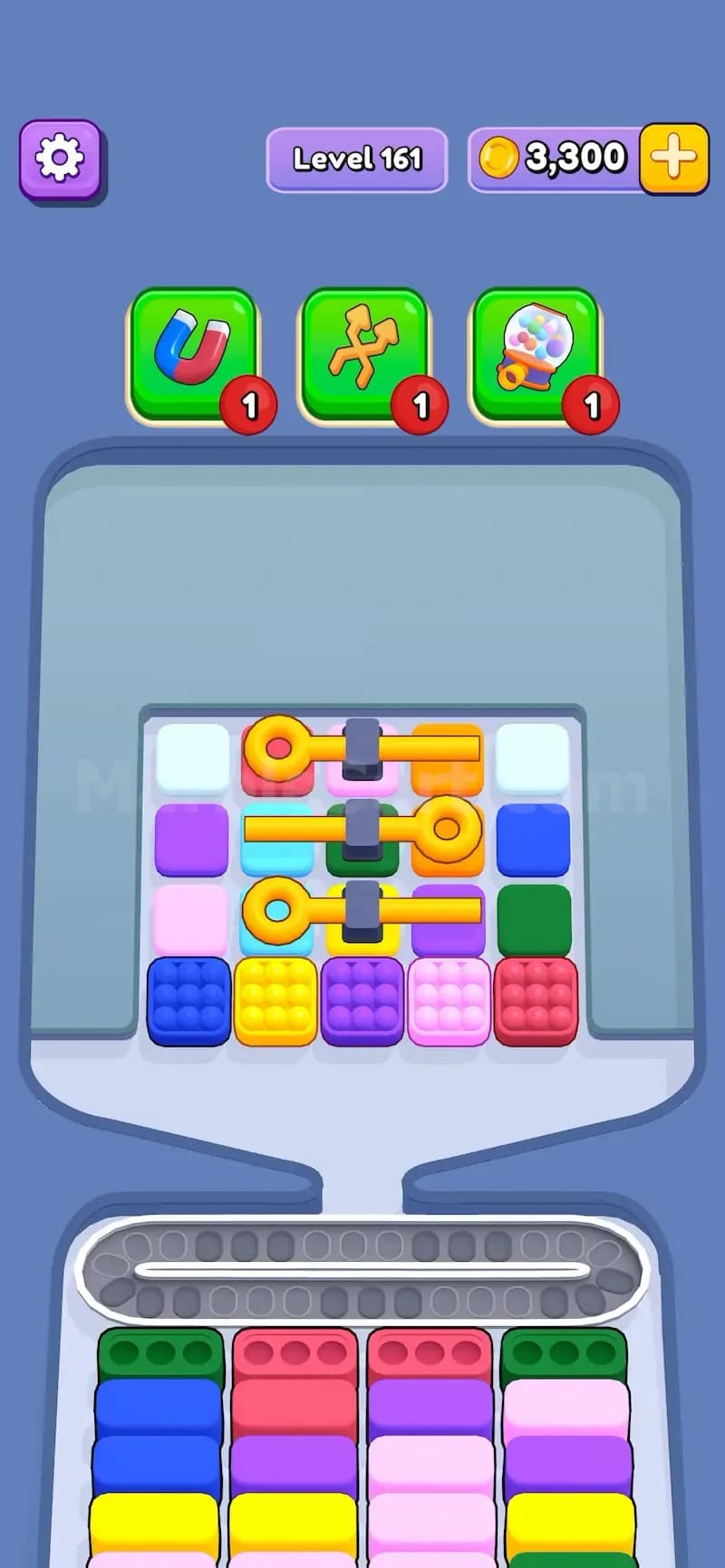
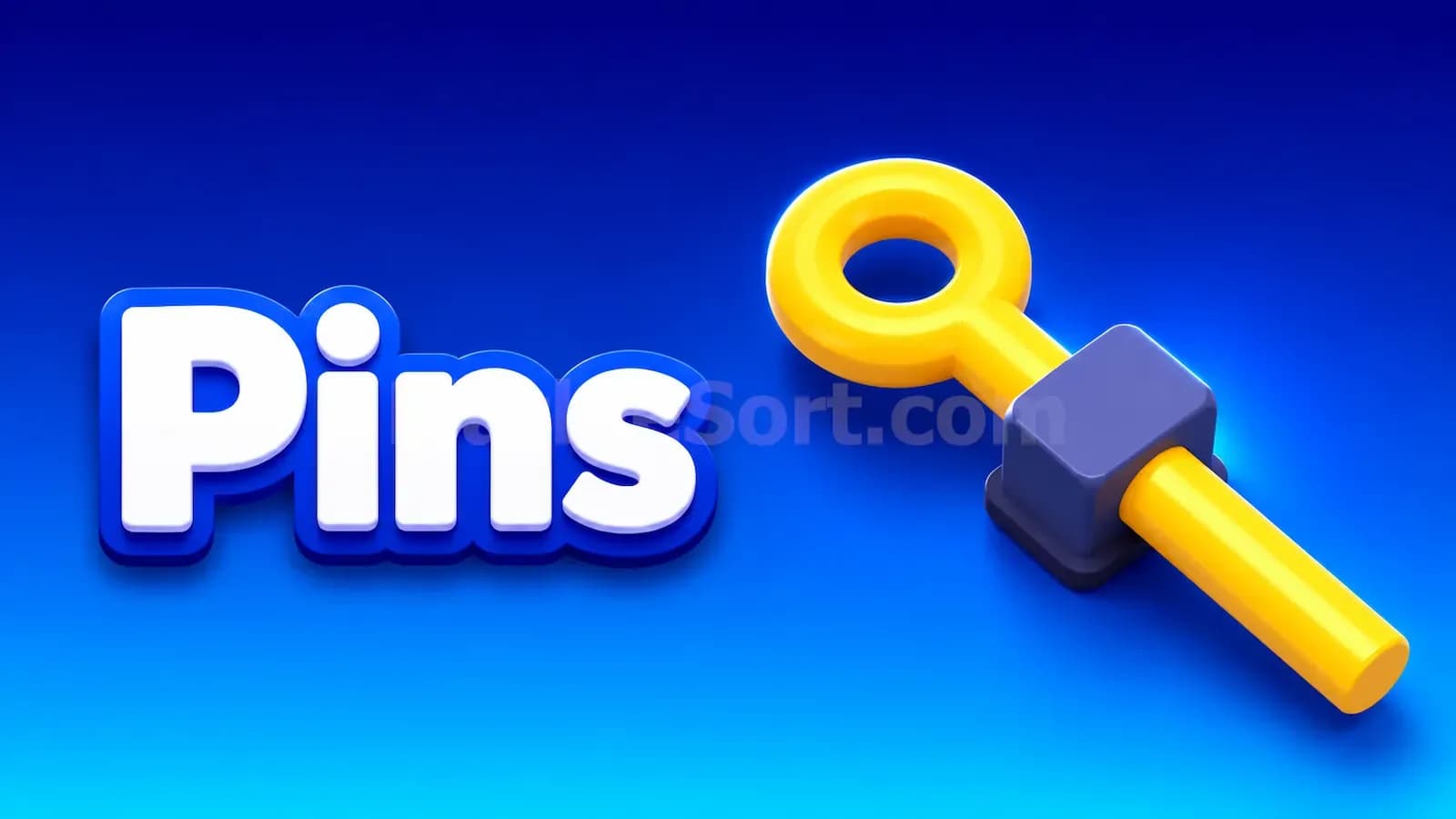
In Marble Sort, Pins are golden bar obstacles that hold boxes in place. They look like large cotter pins, with a round O-shaped head on one side and a straight end on the other. A single Pin can hold 2 to 3 boxes of marbles, and those boxes cannot be dropped until the pin is released.
This sounds simple. It is not.
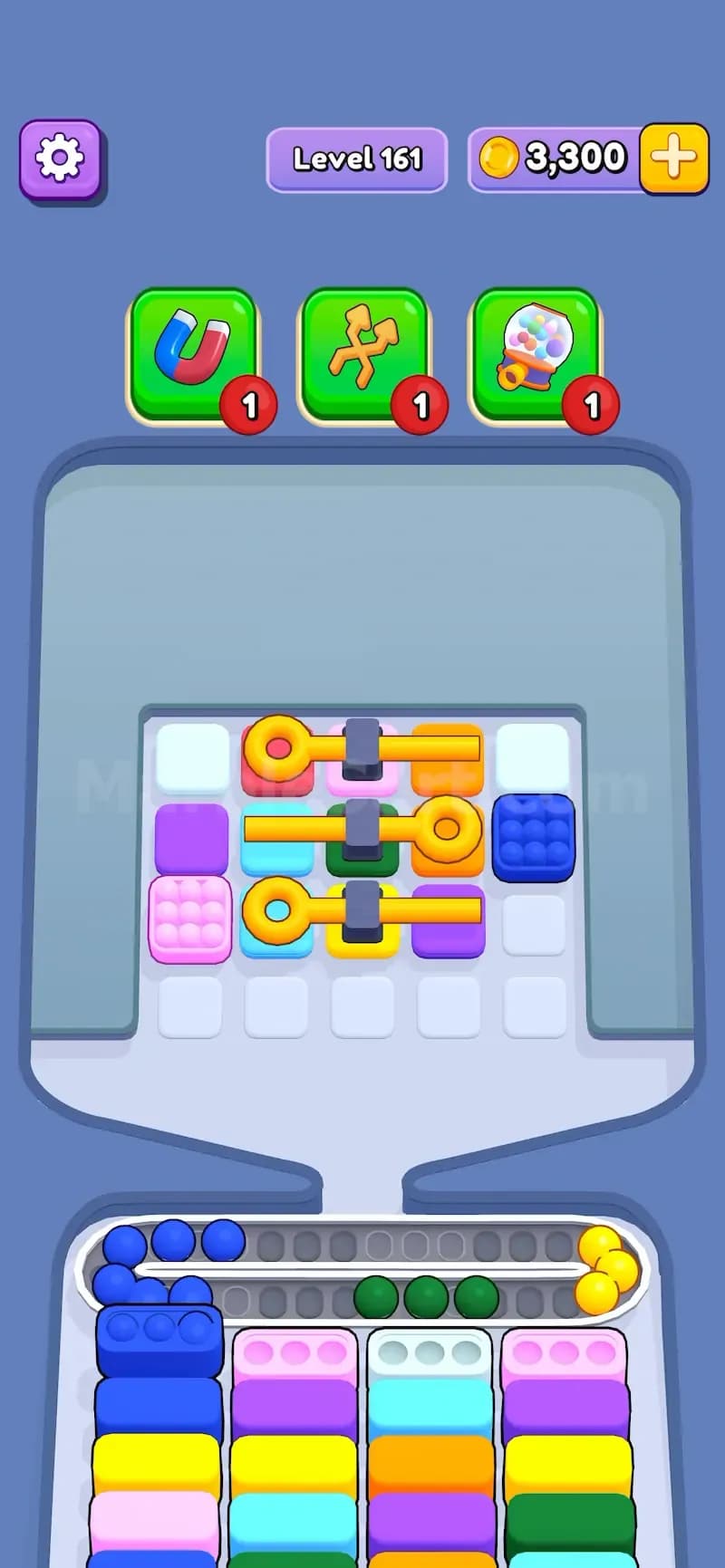
The trick is that you cannot remove a Pin by tapping the boxes it holds. You also cannot remove it by tapping near the tail side. The only way to release a Pin is to drop the one box pressed against the Pin Head. That round head is the whole clue.
Miss that detail and you waste moves fast.
Pins act as a blocker feature. They stop part of the upper board from being used, which means you may see playable-looking boxes that are actually locked in place by the golden bar.
The boxes held by Pins can be:
That last one is the nasty part.
A Pin does not only block marbles. It blocks your route through the level. Sometimes the color you need is sitting behind one pin, but the box required to release that pin is behind another pin. So the puzzle becomes less about color matching and more about opening the board in the correct order.
The rule is strict:
Drop the box touching the Pin Head.
The Pin Head is the round O-shaped side of the golden pin. The tail side does not matter. The middle of the pin does not matter. Only the head side counts.
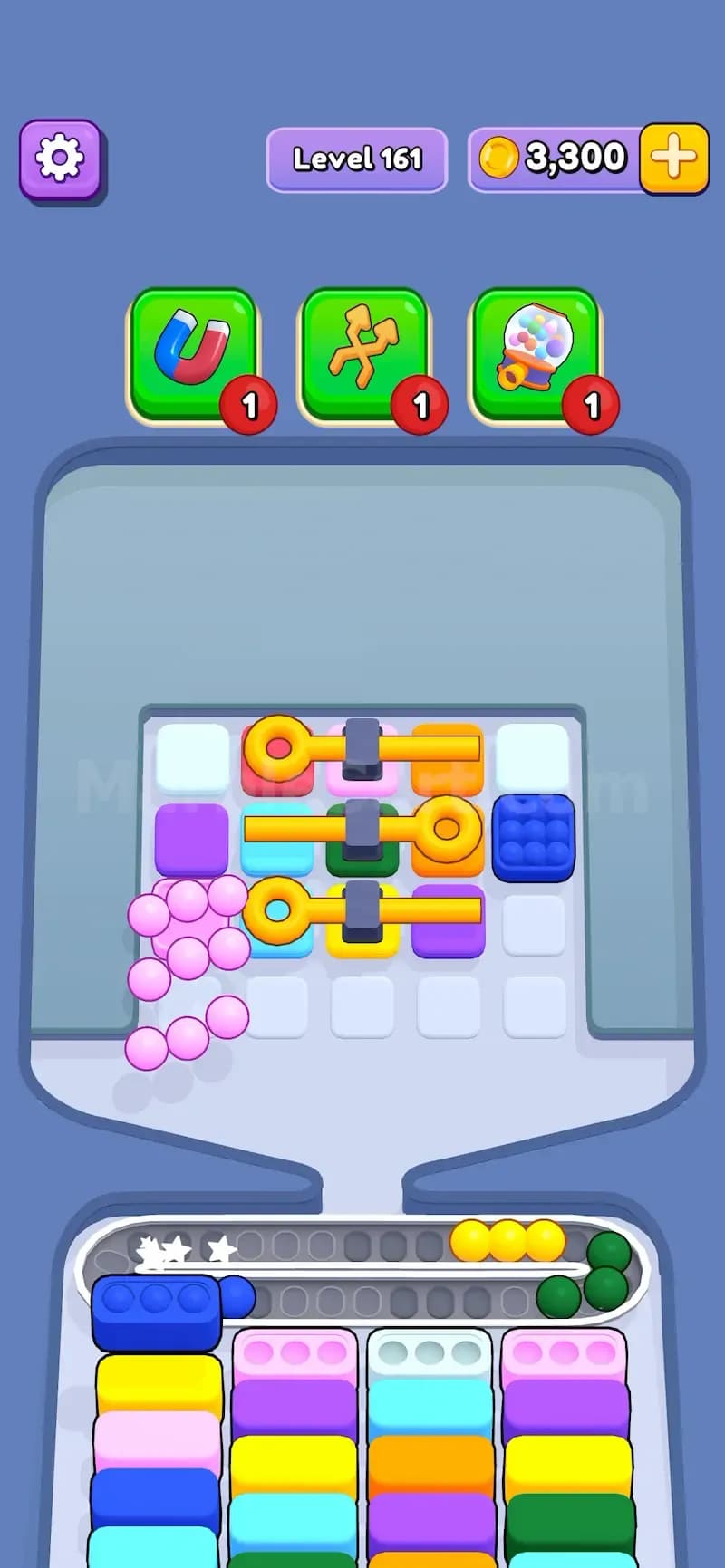
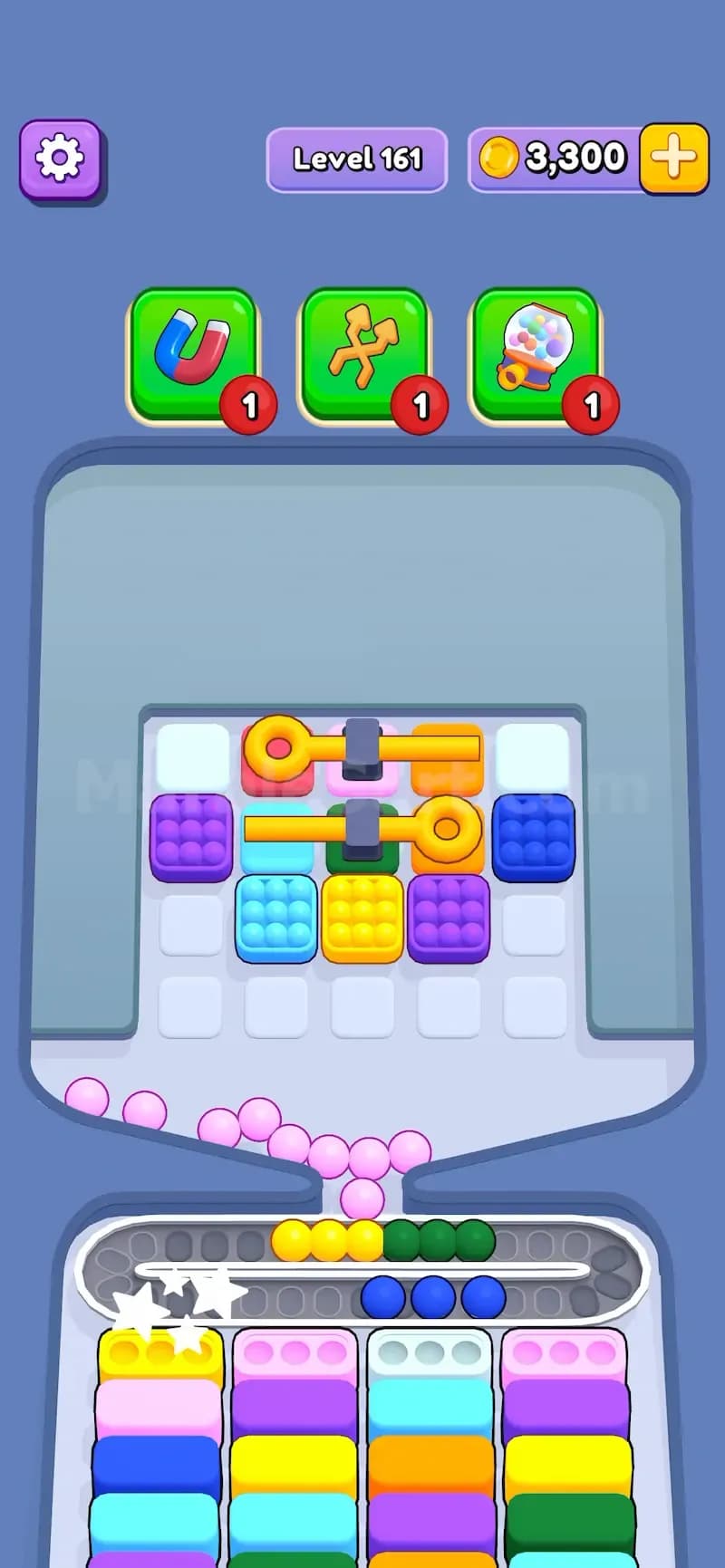
Here is the basic process:
Direction matters every time.
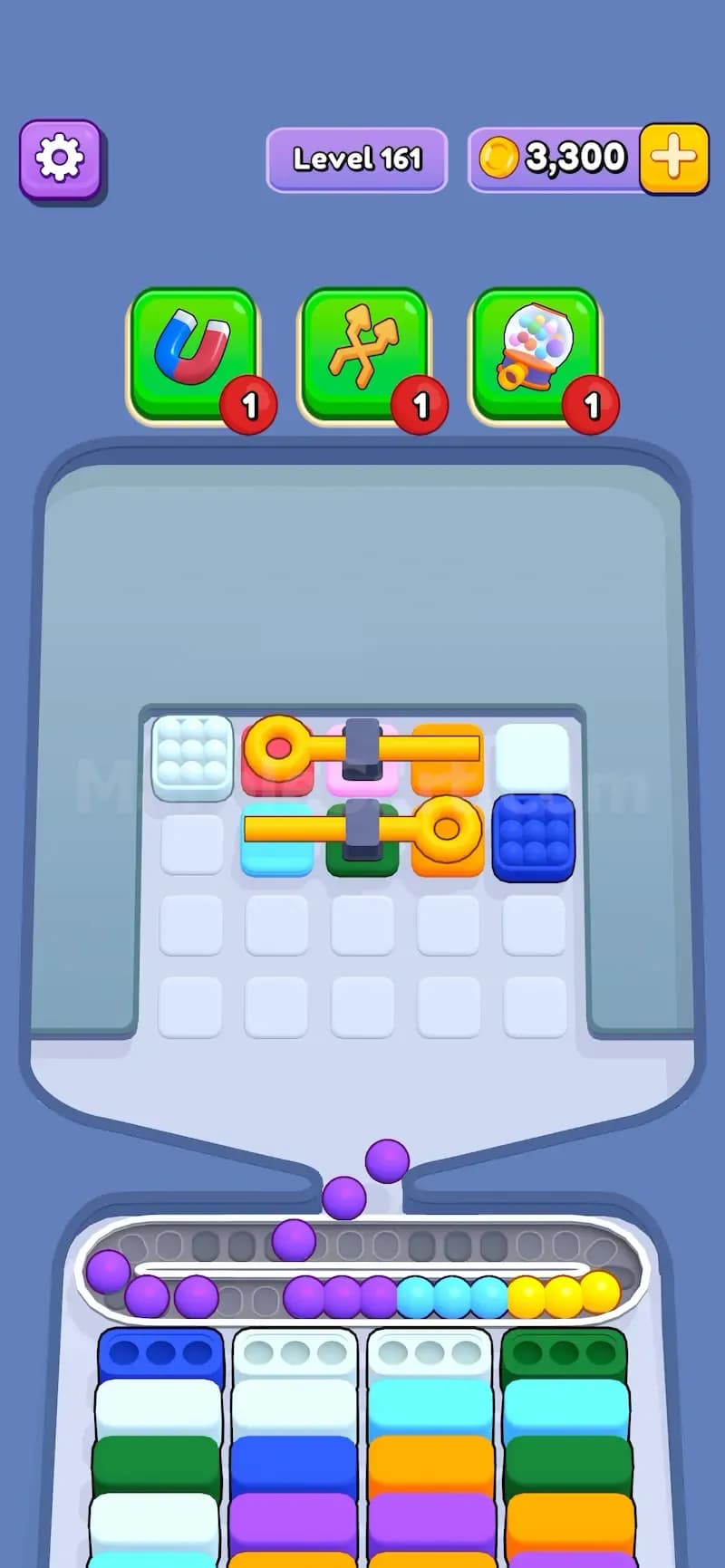
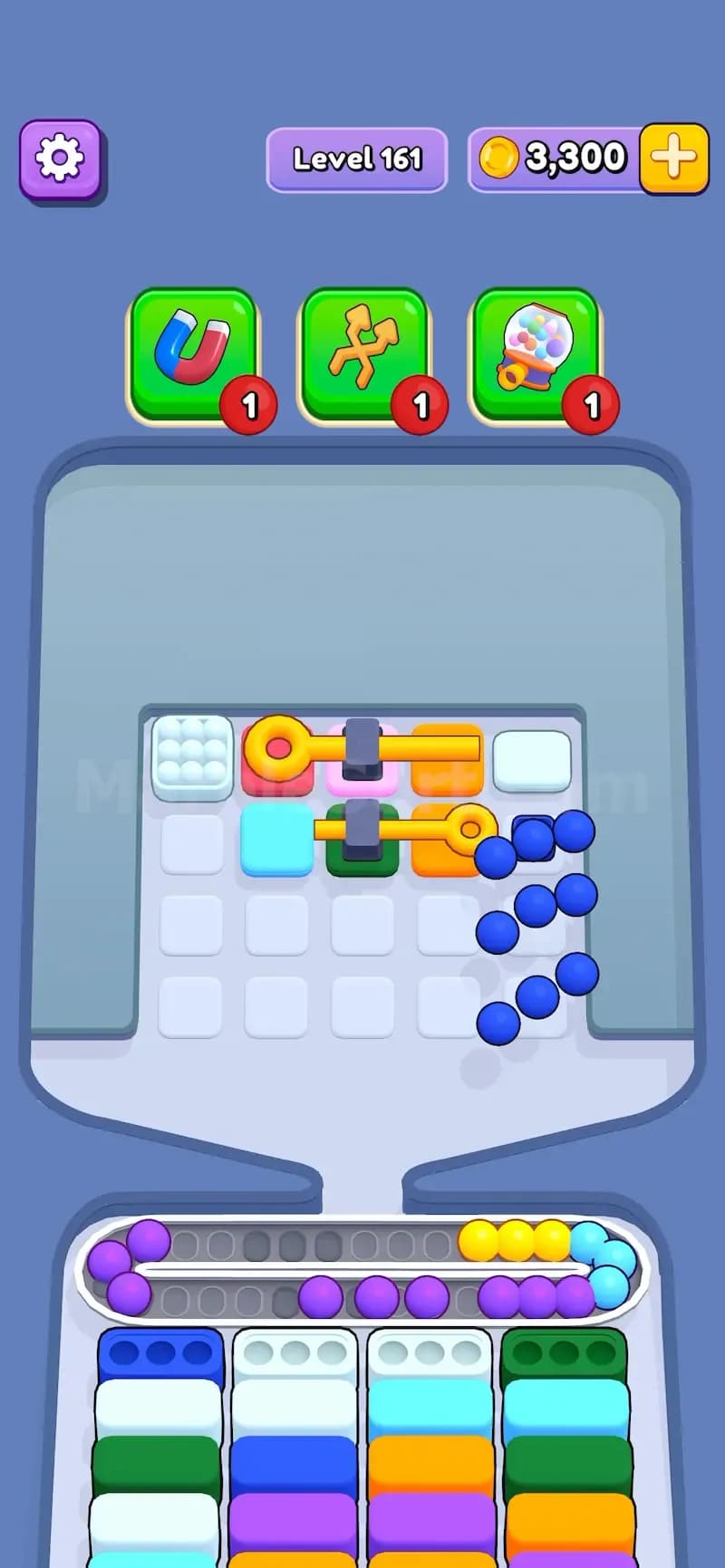
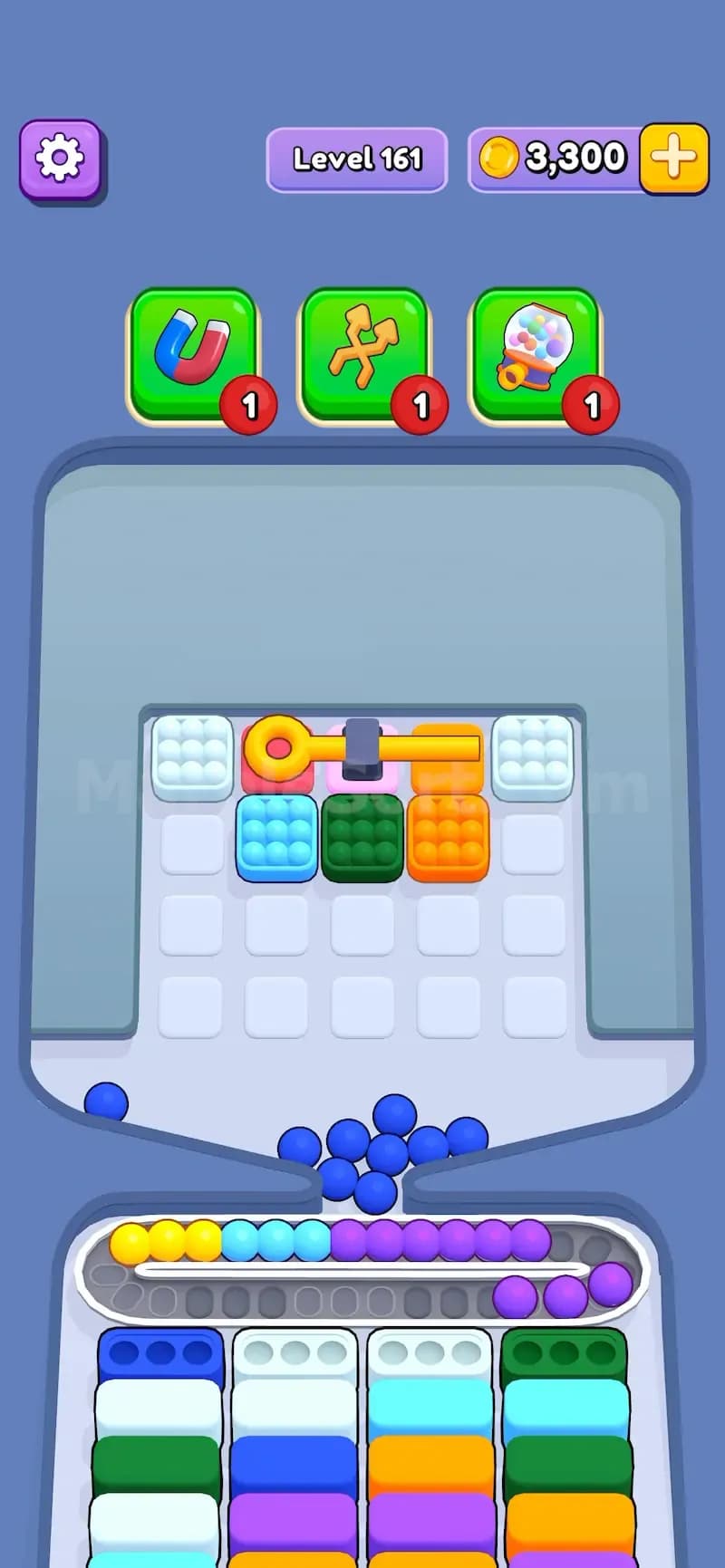
If the Pin runs from left to right and the O-shaped head is on the left, you must drop the box on the left side of that head. If the head is on the right, drop the box on the right side. For vertical pins, use the same logic. Head on top means drop the box above it. Head on bottom means drop the box below it.
Do not guess from the bar. Read the head.
Pins create forced order. That is why they feel annoying in hard levels.
In a normal Marble Sort level, you can usually scan the top board, choose a color that matches the bottom boxes, and drop it. With Pins, that plan often gets blocked. You may need blue, but the blue box is pinned. You may need pink, but the pink route is held behind another pinned box. You may need to clear a Hidden Box, but the only way to expose it is to release a pin first.
Now the level has two jobs:
That second job is where players lose.
The conveyor has limited space. Every bad drop sits there and creates pressure. If you chase a pinned color without checking how to release it, you can end up dumping extra marbles onto the belt with no matching bottom box ready. Then the whole run starts choking.
Pins punish lazy tapping. Hard.
Hidden Boxes make Pins much more dangerous.
A pinned Hidden Box does not show its color, so you do not know whether it contains the exact color you need or something useless. The game likes using this to hide important marbles in a place you would not open early unless you were paying attention.
That means pinned Hidden Boxes deserve special treatment.
If a Pin is holding a Hidden Box, release that pin earlier than you normally would, unless the conveyor is already close to full. You need information. The longer a hidden color stays pinned, the more blind your next moves become.
A bad player waits until the board forces them to open it.
A good player opens the hidden section while there is still room to react.
Before dropping anything, scan the board for every Pin Head. Not every pin. Every head.
That is the difference.
The gold bar tells you what is blocked. The round head tells you what move releases it.
Use this order:
Find all Pin Heads Do this before your first tap. It takes two seconds and saves the run.
Mark the shortest release path Choose the pin head that needs the fewest boxes cleared before you can reach it.
Open pinned Hidden Boxes early Unknown colors are dangerous. Free them while the conveyor still has space.
Do not chase tail-side boxes If a box is near the tail end of a Pin, it usually does nothing for the pin itself.
Look for chain releases Some pins are designed so releasing one exposes the head of another.
Match pinned colors to bottom demand If the bottom has open blue slots and a pinned blue box is near release, prioritize that path.
The main mistake is treating Pins like decoration. They are not. They are the level’s order system.
The most common mistake is tapping the wrong side of the Pin. Players see the golden bar, tap near the tail, and expect something to happen. Nothing does. Then they dump more marbles, clog the conveyor, and lose control of the board.
Another mistake is releasing a pin just because it is available. Do not do that automatically. If the boxes behind the Pin are colors you cannot use yet, opening it may tempt you into dropping bad marbles. Release pins with a purpose.
The third mistake is ignoring pinned Hidden Boxes until the end. That creates panic. When the hidden color finally appears, you may not have enough conveyor room left to use it safely.
Prioritize a Pin when:
Delay a Pin when:
Pins are not always the first move. But they should always be part of the first check.
When multiple Pins cross near the center, do not release the biggest-looking one first. Check which Pin Head opens the next head-side box. The correct path often starts with a boring color that looks useless, because dropping it frees a pin, which exposes another head, which frees the real color you needed three moves ago.
That is the trick. Follow the heads, not the colors.