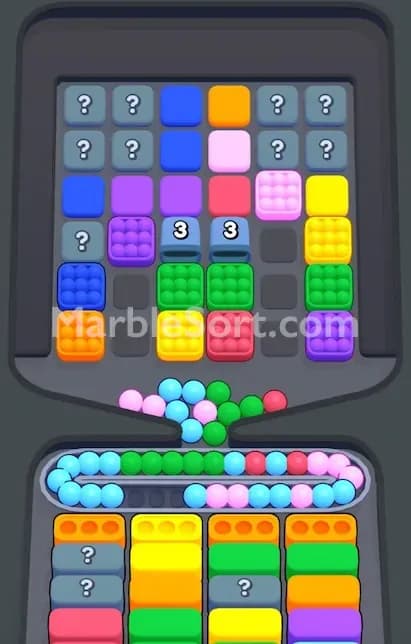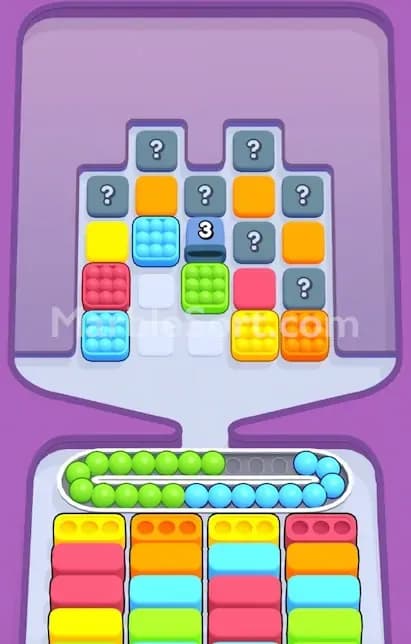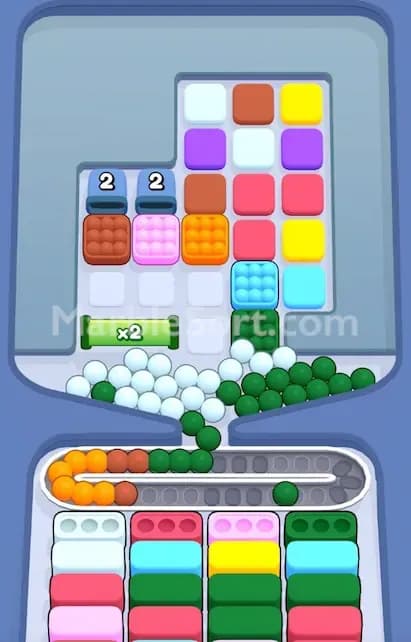

Trio Box looks friendly at first. Then the conveyor gets packed, three colors start rolling at once, and suddenly that “helpful” box is the reason your level is choking.
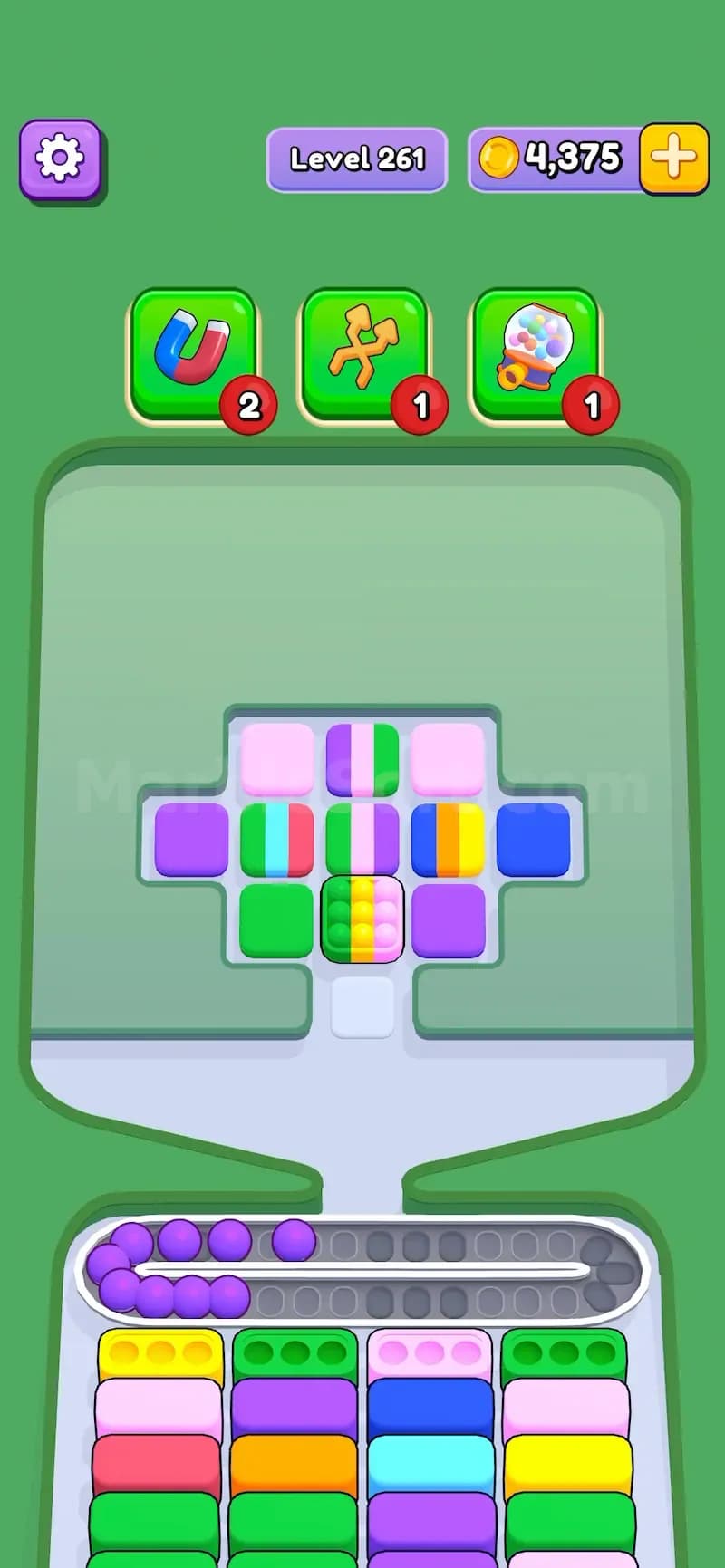
That is the trick with Trio Box in Marble Sort. It is a helper feature, not a free win button.
A normal marble box usually gives you 9 marbles of one color. Clean. Easy to read. You tap it when the matching bottom box needs that color, then you let the marbles sort themselves into place.
Trio Box works differently. It contains 3 different colors, usually split as 3 marbles + 3 marbles + 3 marbles. That means one tap can feed three different bottom boxes at the same time.
Great when the board wants those colors.
Awful when it does not.
Trio Box is a special marble box that holds three colors inside one box. Instead of giving you one full batch of a single color, it gives you a mixed batch.
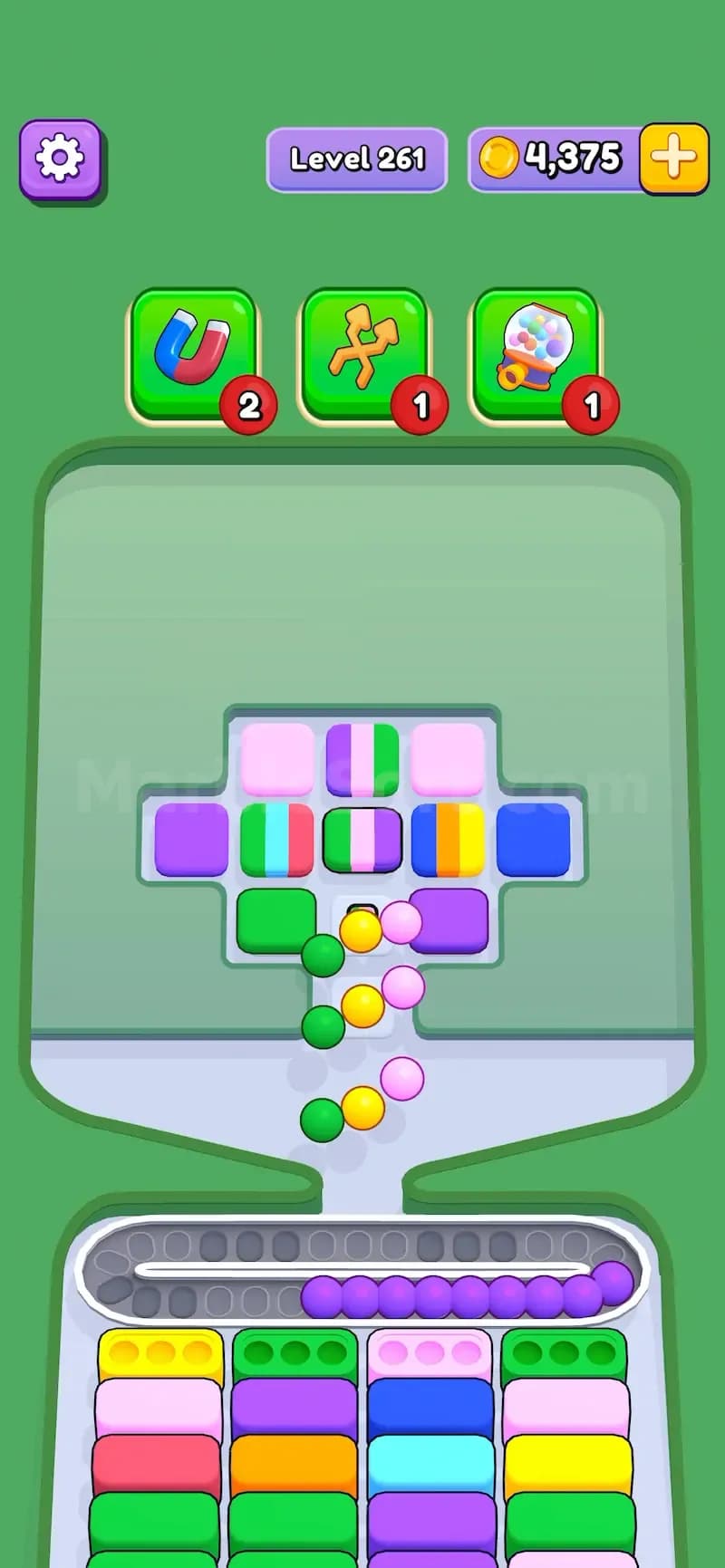
Think of it like this:
The whole point of Trio Box is efficiency. It helps you clear awkward bottom boxes faster, especially when the board has many boxes that are close to finished but not quite there yet.
For example, if your bottom area needs 3 green, 3 yellow, and 3 pink marbles, then a matching Trio Box is perfect. One tap can push all three targets forward.
But if the bottom only needs green, while yellow and pink have no open space, that same Trio Box becomes dangerous. Those extra colors sit on the conveyor, waste space, and increase the chance of a jam.
Here is the basic rule.
That last part matters the most.
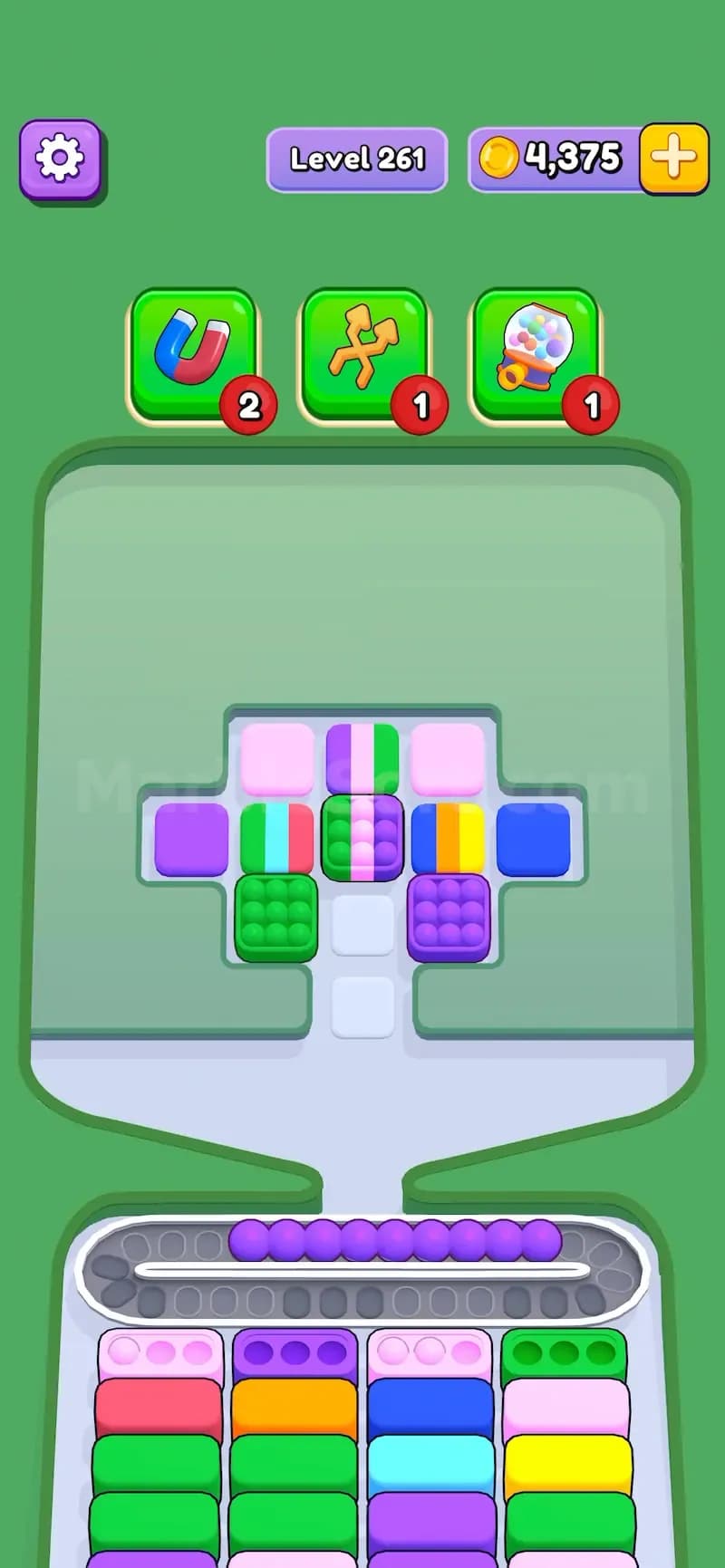
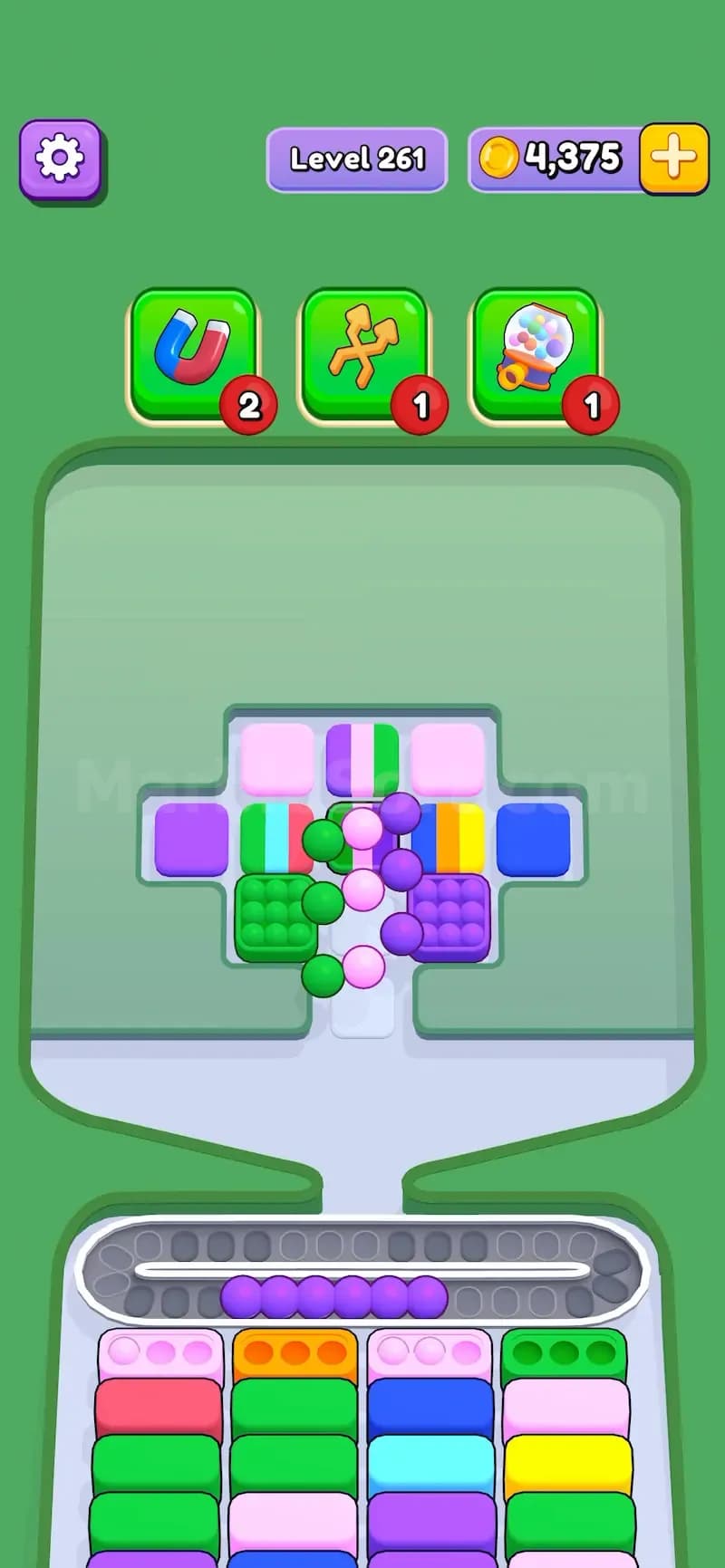
In Marble Sort, the conveyor is not just decoration. It is your pressure meter. Every marble that cannot go into a matching bottom box keeps rolling around and taking space. If too many useless marbles stay on the belt, you run out of room.
Then the level collapses.
So the question is not “Can I tap this Trio Box?”
The real question is “Will at least two of these colors help me right now?”
If the answer is yes, tap it.
If the answer is no, wait.
Trio Box is one of the more interesting helper features because it does not remove a blocker or open a path by itself. Instead, it helps with marble supply management.
It gives you smaller chunks of several colors.
That is useful because many hard levels do not always need a full 9-marble drop. Sometimes the bottom boxes are almost done, and dropping a normal box would send too many marbles of one color. You may only need a few.
That is where Trio Box shines.
Use it when:
A good Trio Box can save a level. It can finish one box, half-fill another, and set up the next clear. That kind of value is hard to beat.
But only when the colors match the board.
The danger of Trio Box is simple: it spreads marbles across the conveyor.
A normal box is predictable. If you drop 9 blue marbles, you know exactly what needs to happen. Blue box ready? Good. No blue box? Bad.
With Trio Box, you have three checks to make instead of one.
Before tapping, check:
If only one color is useful, the Trio Box is usually not worth it yet.
That is the mistake many players make. They see a mixed box and think, “Nice, more options.”
Nope.
More colors can mean more problems.
In hard levels, a bad Trio Box tap can create a conveyor jam faster than a normal box because the marbles split into different queues. One color goes in. Another waits. The third has nowhere useful to go. Now the belt is dirty, and the next move becomes worse.
The best time to use Trio Box is when it hits multiple needs at once.
Look for this situation:
That is the cleanest Trio Box moment.
You drop it, one bottom box clears, the conveyor breathes, and the next color slides into place. Very satisfying.
Another strong moment is when the level gives you many bottom boxes with small gaps. Trio Box handles small gaps better than normal boxes because it does not overcommit to one color.
A normal box can be too heavy.
Trio Box is lighter, but wider.
Do not use Trio Box just because it is reachable.
Bad times to tap it include:
This feature punishes lazy tapping.
If you tap a Trio Box too early, you may block the conveyor with colors that were meant for later. If you tap it too late, the board may already be too crowded to handle the mixed drop.
The best play is usually middle timing. Not instant. Not desperate. Controlled.
In easy levels, Trio Box feels like bonus value. You tap it, colors go where they need to go, and the level keeps moving.
In hard levels, the feature becomes a reading test.
The game may place several Trio Boxes near each other, and the colors start looking messy fast. You might see pink-green-yellow, green-purple-pink, blue-yellow-red, and another mixed box hidden behind a path.
That is when players panic.
Do not read every Trio Box first. Read the bottom boxes first.
The bottom tells you what matters.
If the bottom needs green, pink, and yellow, then find the Trio Box that carries those colors. If the bottom needs blue and orange, ignore the green-heavy Trio Box for now.
This sounds obvious, but in a fast board, players usually do the opposite. They stare at the top, tap what looks useful, and only then check the bottom.
Wrong order.
Bottom first. Top second.
Use this simple plan.
That 2 out of 3 rule is the easiest way to avoid bad Trio Box drops.
A perfect Trio Box uses all three colors.
A decent Trio Box uses two colors.
A bad Trio Box uses one color and dumps two problems onto the conveyor.
Simple.
The biggest mistake is treating Trio Box like a normal box.
It is not.
A normal box asks one question: “Do I need this color?”
A Trio Box asks three questions at the same time.
Other common mistakes include:
The worst habit is panic tapping. Trio Box rewards players who pause for one second and read the board. That tiny pause can save the level.
When the board has many Trio Boxes, stop trying to compare every mixed box at once. That will fry your brain.
Pick the rarest color you need on the bottom first.
Say you badly need yellow, but only two visible boxes contain yellow. Those become your priority. Now check which of those yellow Trio Boxes also includes another useful color.
This cuts the decision down fast.
You are no longer asking, “Which Trio Box is best?”
You are asking, “Which yellow Trio Box gives me the cleanest extra value?”
That is much easier, especially in late-game levels where every mixed box looks like candy soup.