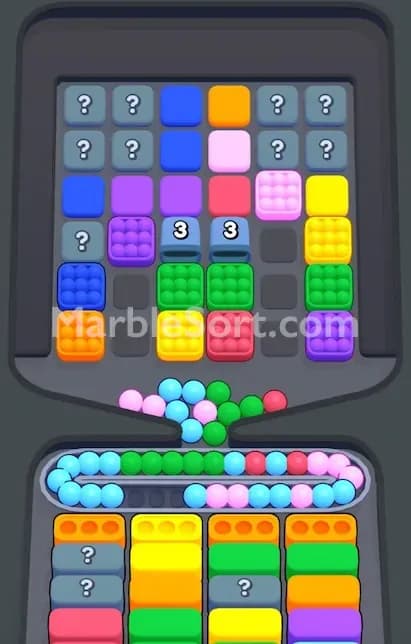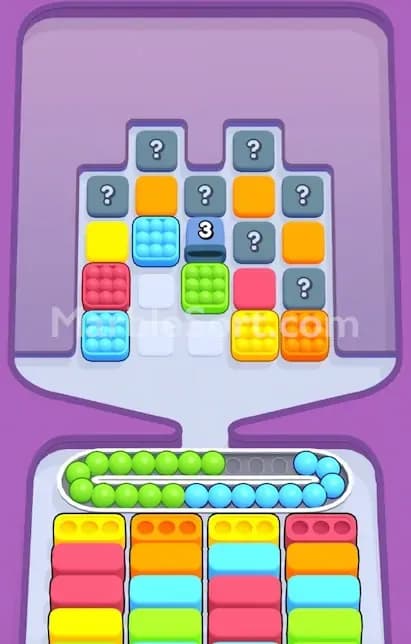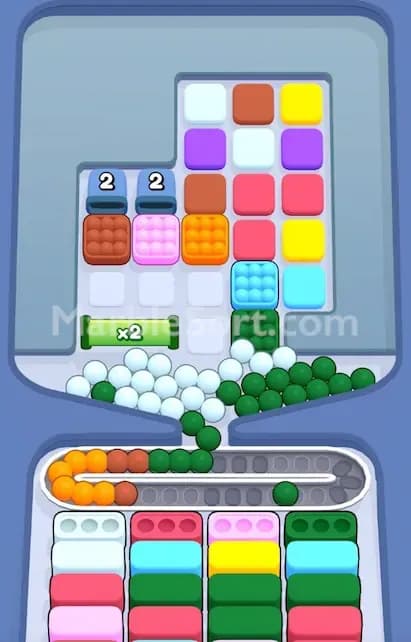

You have the right marble color ready, the bottom box is sitting there, and the conveyor is already getting crowded. Then nothing clears.
That is Locked Pallet doing its job.
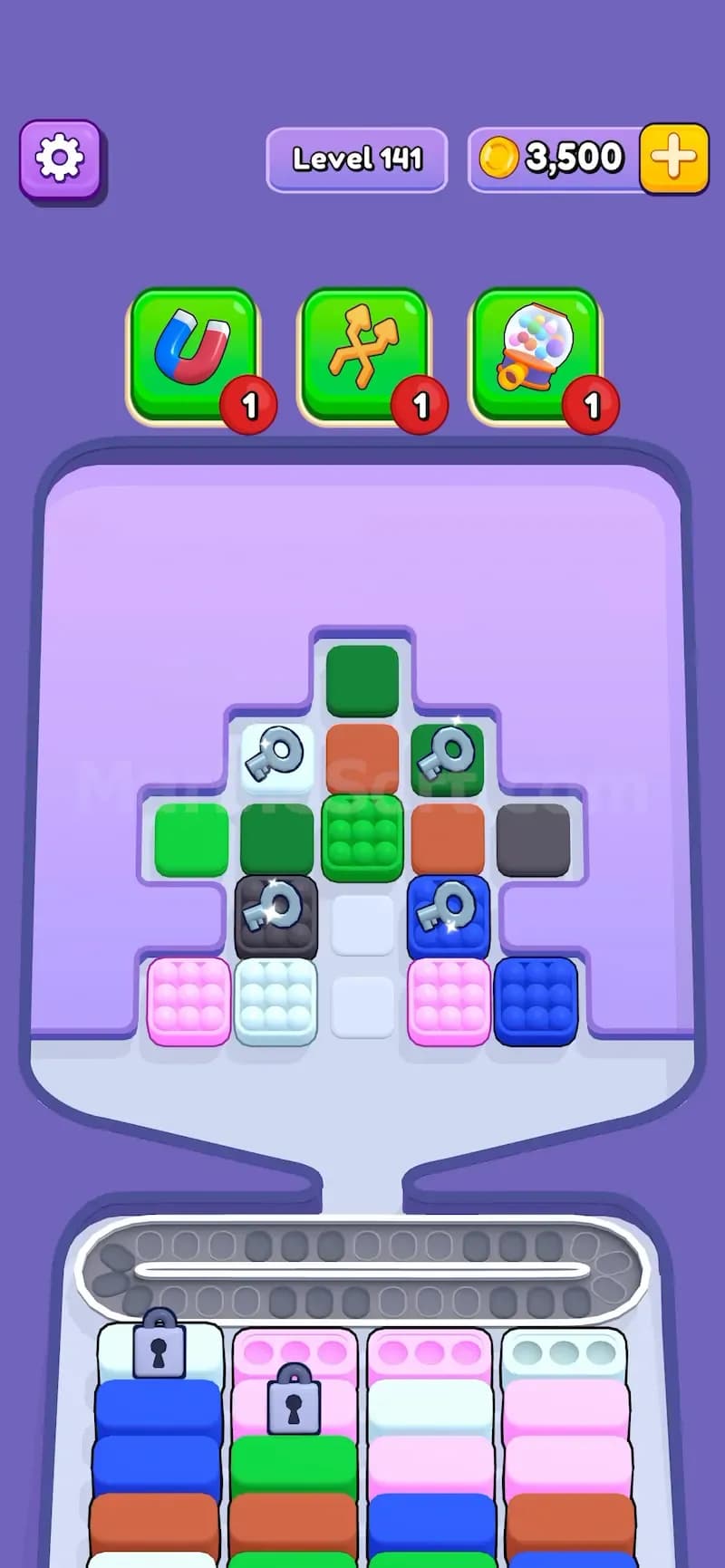
Locked Pallet is one of the nastier blocker features in Marble Sort because it does not stop you from dropping marbles. It lets you make the mistake. You can keep tapping boxes from the top board, fill the conveyor with useful colors, and still lose because the bottom box you need is locked. The game does not care that you had the right plan. If the lock is still there, the color cannot clear.
This feature is easy to understand once you split it into two parts:
Drop a top box with a key, and that key becomes ready to open a lock. The trick is that Locked Pallet keys are universal. They are not color-matched like Locked Gate keys. A key does not need to match a blue lock, green lock, or pink lock. It simply opens the next valid lock based on the level’s fixed order.
That one rule changes the whole level.
Locked Pallet is a blocker that protects colored boxes at the bottom of the screen. These are the boxes you normally fill with matching marbles from the conveyor.
In normal levels, your flow is simple. You check which colors are available at the bottom, then drop matching marble boxes from the top. Once the bottom box gets enough matching marbles, it clears and the next box in that column moves up.
With Locked Pallet, that flow gets interrupted. A bottom box may already be visible, but if it has a lock on it, it cannot be cleared yet. You need to drop a top box carrying a key first.
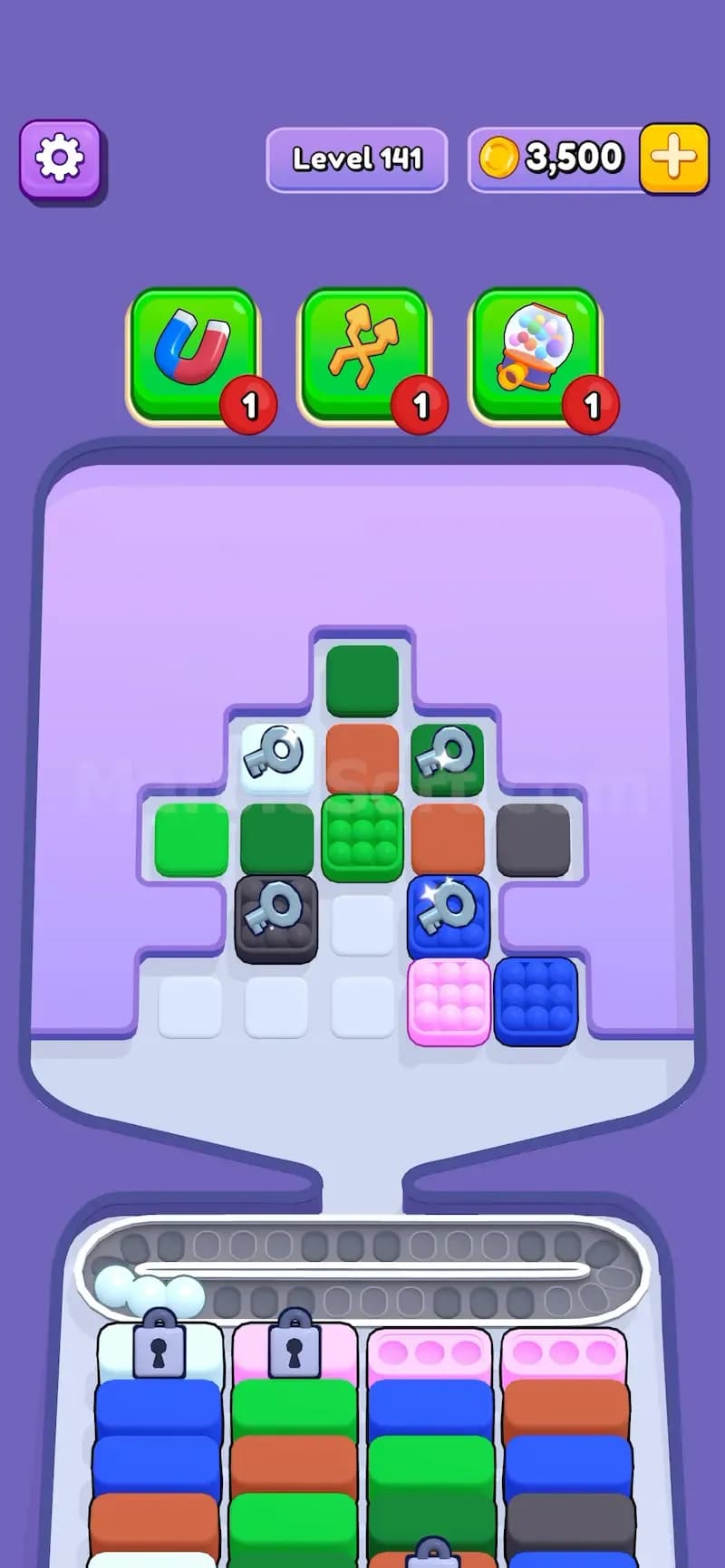
That sounds simple. It is not.
The hard part is timing. A key can be collected before a lock is visible in the active row. When that happens, the key waits in the queue. It does not vanish. Once a locked box reaches the first row in any bottom column, the stored key opens it.
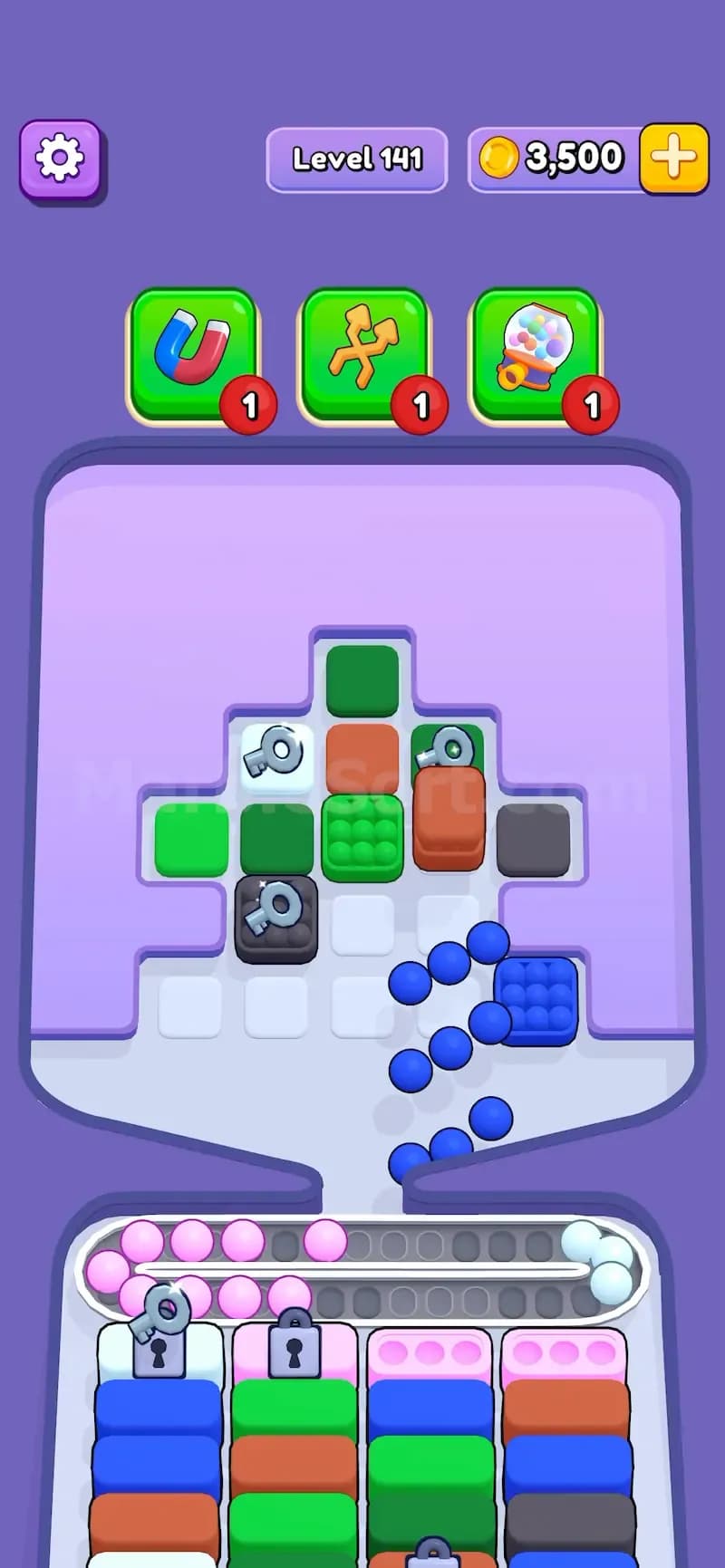
So the real question is not just “Where is the key?”
The real question is: “Which lock will this key open?”
Locked Pallet and Locked Gate share the same basic theme: keys open locks. But they create totally different problems.
Locked Gate happens on the top board. It blocks part of the playable area and stops you from dropping certain marble boxes until you open the gate. Usually, the key and lock are color-linked, so a specific colored key opens the matching gate.
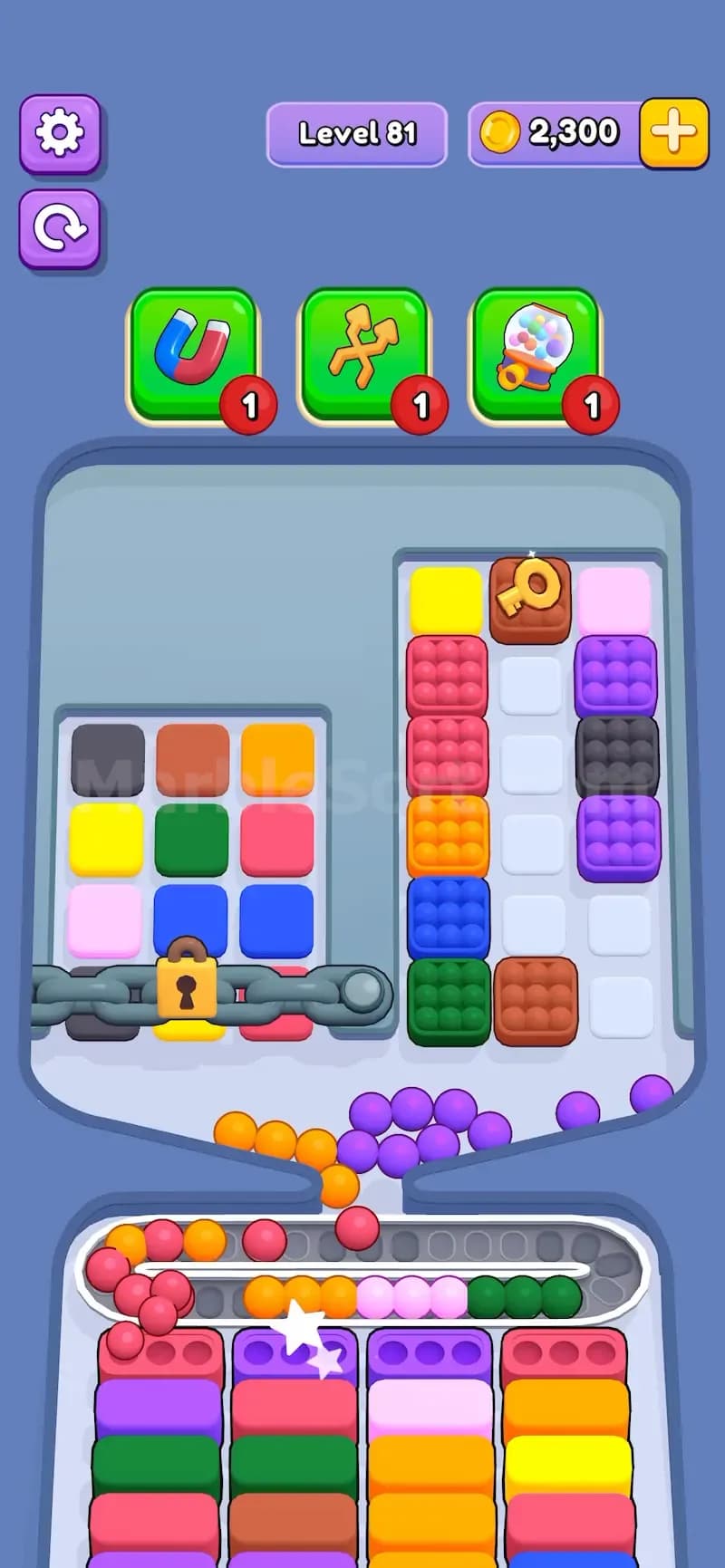
Locked Pallet happens at the bottom. It does not block access to the top boxes. Instead, it blocks your ability to clear the bottom boxes, which is often worse. You can still drop marbles, but those marbles may have nowhere useful to go.
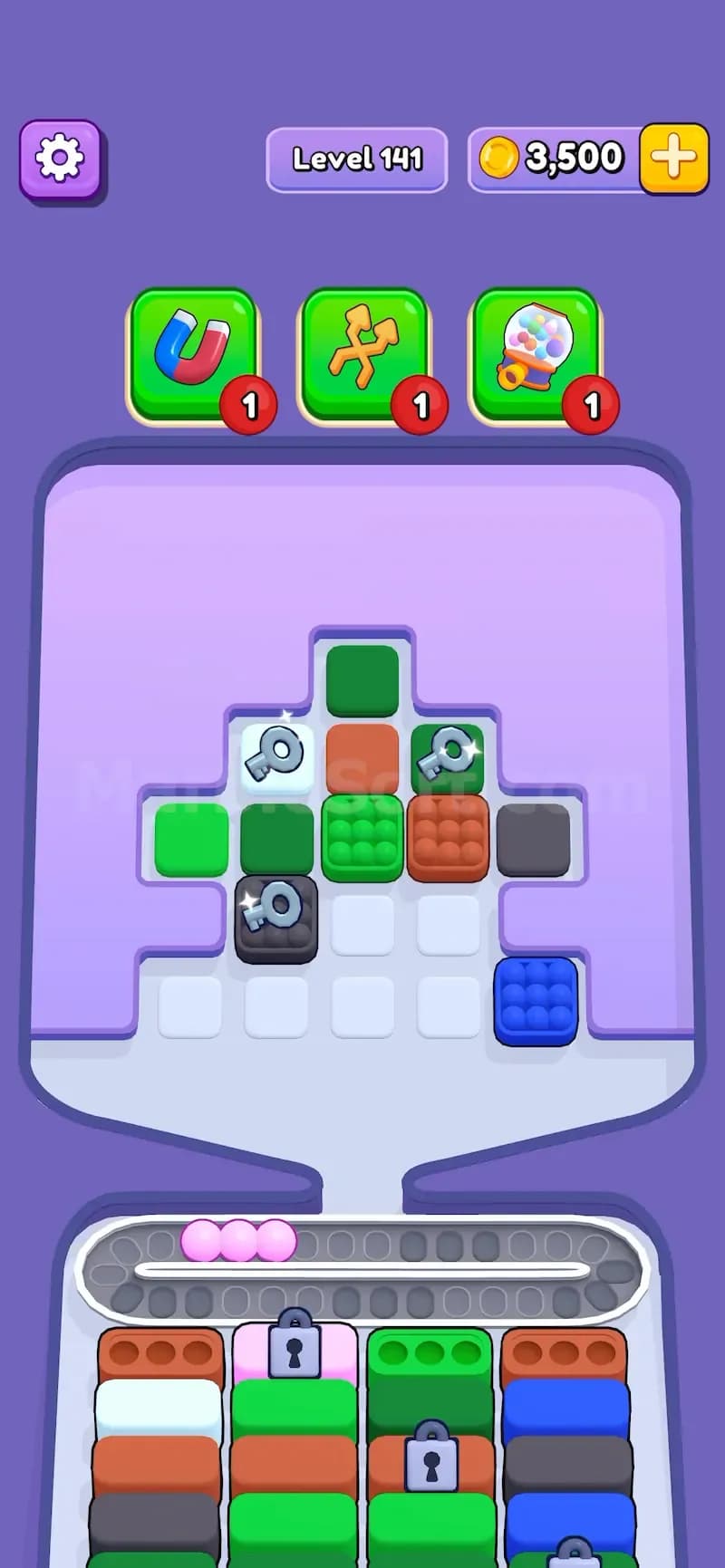
That means Locked Gate blocks movement.
Locked Pallet blocks cleanup.
And in Marble Sort, cleanup is survival.
Check the bottom boxes first.
Look for any box with a lock on it. These are the boxes that cannot be cleared yet.
Find the key boxes on the top board.
A key will appear on one or more top marble boxes. These boxes must be dropped to collect the key.
Drop a key box.
When you drop a box with a key, the key enters the key queue.
Wait for the right lock to appear.
If no locked bottom box is currently active in the first row, the key waits.
The next active lock opens.
Once a locked bottom box reaches the clearable row, the queued key opens it.
Clear that bottom box fast.
After the lock is gone, treat that box as a priority. You already spent a key to free it. Do not leave it sitting there while the conveyor fills up.
The danger comes from false confidence.
You see a blue bottom box. You see blue marbles at the top. So you drop them. That is normally the correct move. But if the blue bottom box is locked, those marbles cannot complete the box yet. They keep circling on the conveyor, taking space, bumping into other colors, and making the next move worse.
Now add another locked box. Then another.
Suddenly, the level is not about color matching anymore. It is about opening the correct bottom boxes before you send too many marbles into a dead zone.
That is why Locked Pallet can feel harsher than Hidden Box or Mystery Box. Hidden features hide information. Locked Pallet shows you the answer, then refuses to let you use it.
Rude. Effective, though.
The best way to handle Locked Pallet is to stop playing like every bottom box is available. Locked boxes are not targets yet. They are future targets.
Use this order:
Clear unlocked boxes first if they are safe.
If an unlocked box can be finished quickly, take it. You need conveyor space.
Grab keys before the jam starts.
Waiting too long to collect a key is one of the fastest ways to lose. Once the conveyor is half full, fixing a locked bottom row becomes much harder.
Do not drop a big stack into a locked color.
A box of nine marbles can become a disaster if its target is locked. Drop smaller, safer colors while preparing the key.
Watch the bottom column order.
The lock that matters is the one about to reach the active row. A lock buried two boxes down is not urgent yet. A lock sitting in the first row is.
Use keys with purpose.
Since keys are universal, do not think of them as color tools. Think of them as timing tools. The next lock in line gets opened, so plan around that.
The biggest mistake is dropping marbles for a locked box just because the color matches. That move feels correct for one second, then the conveyor tells you the truth.
Another mistake is collecting every key too early without checking the bottom order. A queued key is useful, but only if you know what it is about to open. If you blindly stack keys, you may open locks in an order that does not help your current conveyor problem.
Players also ignore side columns too often. In many hard levels, the lock that breaks the board is not in the center. It is in a side column, waiting behind a color you were planning to clear later. Bad plan. Side locks can stall the whole bottom row if they block a color that keeps appearing from the top.
When a key is available, do not always drop it instantly. First, check which bottom column is closest to showing a locked box in the active row. If that lock protects a color you do not need yet, clear one small unlocked box first and let a better lock move into position. Then drop the key box.
This tiny delay can save the run.
It feels weird because most players treat keys like emergency buttons. They are not. In Locked Pallet levels, keys are more like traffic control. Use them too early and you open the wrong road. Use them one move later and the whole board suddenly clears.